How to Improve Your Balance for Surfing
How to Improve Your Balance for Surfing
Why Balance Is the Foundation of Everything
There is a moment every beginner surfer knows intimately. You have paddled hard, felt the wave lift the back of your board, popped up with what felt like perfect timing – and then, within half a second, you are underwater, tumbling, not entirely sure which way is up. It is not always about the wave being too powerful, or your timing being off. More often than not, it comes down to balance. Specifically, the lack of it.
Balance in surfing is not a single skill. It is a conversation between your feet, your hips, your eyes, and the constantly shifting surface beneath you. Learning to manage that conversation is what separates someone who catches a wave and rides it cleanly to the shore from someone who repeats the same wipeout for the fifth time in a session. The good news is that balance is trainable. You do not need to be a natural athlete, a former gymnast, or someone who grew up near the coast. You just need to understand what you are working on, and then do the work – consistently and intelligently.
This guide is specifically aimed at UK surfers. Whether you are learning at Croyde in Devon, Perranporth in Cornwall, Freshwater West in Pembrokeshire, or Thurso in the far north of Scotland, the principles here apply. The waves might be cold, the wetsuits thick, and the car parks occasionally nightmarish on a Bank Holiday weekend, but the mechanics of balance are universal.
Understanding What Balance Actually Means on a Surfboard
Most people think of balance as a static thing – standing still without falling over. On a surfboard, balance is almost entirely dynamic. The board is moving, the water beneath it is moving, and your body must constantly make tiny adjustments to stay centred over a shifting point. This is called dynamic balance, and it involves a network of sensory systems: your vestibular system (the inner ear), proprioception (your body’s awareness of its own position in space), and vision.
When you first stand on a surfboard, all three of these systems are slightly overwhelmed. The board feels unstable, the water looks confusing, and your brain is simultaneously trying to process a wave, remember your instructor’s advice, and stop you falling. Over time, with practice, your nervous system adapts. What feels chaotic gradually becomes manageable, and eventually almost automatic. But you can accelerate that process significantly by training your balance specifically – not just by surfing more, but by doing targeted work on dry land as well.
Getting Your Stance Right Before Anything Else
Before you can improve your balance, you need to make sure your stance is not working against you. A poor stance creates instability from the very beginning, and no amount of training will fully compensate for it.
Your feet should be roughly shoulder-width apart, positioned across the width of the board rather than along its length. Your knees should be soft – bent, not locked. Think of a slight crouch, as though you are about to sit down on a low chair but have stopped halfway. Your weight should be centred between both feet, with perhaps a very slight bias towards the back foot to keep the nose of the board from pearling (digging into the water).
Your arms are balance tools, not decorations. Keep them out to your sides at roughly waist height, slightly forward of your body. Your gaze should be directed towards where you want to go – down the line, towards the beach – not down at your feet. Looking down is one of the most common beginner habits, and it actively undermines your balance by throwing your weight forward and disconnecting you from your visual horizon.
A quick way to test your natural stance: stand on a flat floor, close your eyes, and have someone give you a gentle push from behind. Whichever foot you instinctively step forward with is likely your back foot on the board. If your left foot goes forward, you are probably goofy-footed (right foot back). If your right foot goes forward, you are likely regular (left foot back). Most UK surf schools will run through this with you, but it is worth knowing before you get in the water.
Dry Land Training: The Underrated Part of Learning to Surf
There is a persistent myth that the only way to get better at surfing is to surf more. Surfing more certainly helps, but dry land training for balance is genuinely transformative, particularly in the UK where consistent surf conditions are far from guaranteed. You might get to the beach twice a month if you are lucky and live inland. What you do between those sessions matters enormously.
The balance board is the single most useful piece of dry land equipment for surfers. A Bosu ball (the half-dome rubber ball you see in gyms) is also excellent, as is a wobble board. Many UK surf shops stock these, including Saltrock, Osprey, and various independent surf retailers across Devon and Cornwall. You can also find them on Amazon or at chains like Decathlon, which has stores across the UK including locations in Bristol, Birmingham, and London.
Here is a practical dry land balance routine you can do at home, three to four times a week:
- Single-leg standing: Stand on one foot with your knee slightly bent. Hold for 30 seconds, then switch. Once this feels easy, close your eyes. Once that feels easy, add small arm movements or turn your head side to side while holding the position. Aim for three sets per leg.
- Balance board squats: If you have a balance board or wobble board, stand on it in your surf stance and perform slow, controlled squats. The instability forces your stabilising muscles to engage constantly. Start with ten repetitions and build up over time.
- Bosu ball pop-ups: Place a Bosu ball flat-side down on a mat. Lie face down on it as though on a surfboard, and practise your pop-up movement onto the ball. The instability mimics the feeling of the board beneath you far better than a flat floor does.
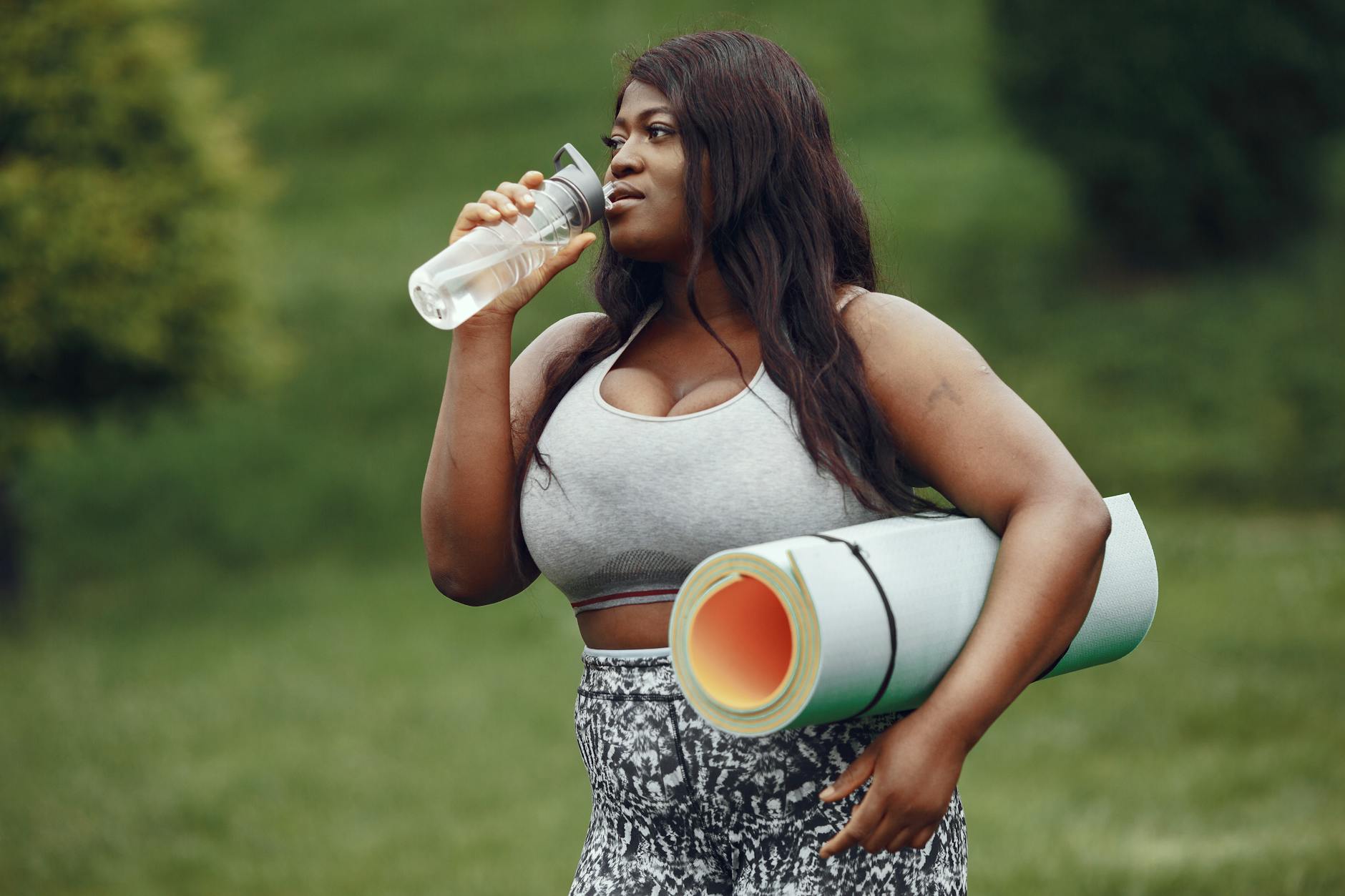
- Yoga – specifically standing poses: Tree pose, Warrior III, and Half Moon pose all develop the specific kind of balance and body awareness that surfing demands. Many surfers in the UK use yoga as a serious training tool; there are surf-yoga retreats in Cornwall and Wales that combine both disciplines precisely because the crossover is so significant.
- Skateboarding or longboarding: Riding a skateboard, particularly a longboard, replicates the hip movements and weight shifts of surfing more accurately than almost any other dry land activity. You do not need to learn tricks. Simply riding around a car park in your surf stance, shifting your weight to turn, is enormously beneficial.
- Slacklining: A slackline is a flat webbing stretched between two trees or posts, and walking along it is one of the most effective balance-training activities in existence. It is also genuinely fun once you get past the initial frustration. You can buy beginner slackline kits in the UK for around £20-£40.
In the Water: Small Adjustments That Make a Big Difference
All the dry land training in the world will only take you so far. Eventually, you need to be in the water, on the board, feeling waves beneath you. Here is where balance training starts to click together with the physical reality of surfing.
One of the best things you can do early in a session is simply lie on the board in the white water and feel how it moves. Before you even attempt to stand, get comfortable with the sensation of the board shifting beneath you. Paddle around, feel where the board sits in the water, notice how it responds when you shift your hips to one side. This builds proprioceptive awareness of the board as an extension of your body – which is exactly what more advanced surfers have developed over years.
When you do stand up, resist the urge to immediately look at your feet to check your positioning. Trust your feet. Use your eyes for what they are actually good at in this context: reading the wave ahead of you and giving your body the horizon reference it needs to stay upright. Beginners who stare at their feet lose their horizon, which throws the vestibular system into confusion and makes balance significantly harder.
Keep your movements small and reactive. Many beginners, when they feel themselves tipping, make large, dramatic corrections – throwing their arms out wildly, lurching their hips. Smaller adjustments, made earlier, are almost always more effective. Think of it like riding a bicycle: you do not steer with large swings of the handlebars; you make constant, tiny corrections. Surfing balance works the same way.
The Role of Core Strength in Surfing Balance
Balance and core strength are not the same thing, but they are deeply connected. A weak core makes balance much harder to maintain, because the muscles that stabilise your spine and hips – the transverse abdominis, the multifidus, the obliques – are the same muscles doing a great deal of the work when you are riding a wave.
You do not need to spend hours in the gym. A short, consistent core routine done three or four times per week will make a noticeable difference within a few months. Planks (front and side), hollow body holds, dead bugs, and bird dogs are all highly effective and require no equipment. If you are going to a surf lesson and have not been doing any physical preparation, simply adding a five-minute plank routine to your morning will give your instructor something more to work with.
Surf coaching in the UK has become increasingly sophisticated in recent years. Schools like Escape Surf School in Newquay, the National Surfing Centre (also in Newquay), and numerous independent coaches operating across Pembrokeshire and the North Devon coast now offer video analysis and tailored fitness advice alongside in-water coaching. If you are serious about improving, one of these more structured programmes can be genuinely revelatory.
Dealing With Cold Water and Thick Wetsuits
There is something specific to UK surfing that deserves its own mention: the effect of cold water and thick wetsuits on your balance. This is not something you will read about in a generic surfing guide aimed at Californians.
A
4mm or 5mm wetsuit restricts your movement considerably, particularly around the hips and shoulders, and this stiffness has a direct knock-on effect on how freely you can shift your weight over the board. You may find that movements which feel natural in summer become effortful and slightly delayed in winter, and that your pop-up feels sluggish in a way that has nothing to do with your fitness or technique. This is normal, and worth factoring into your expectations.
The cold itself also affects proprioception — your body’s sense of where its limbs are in space. Numb feet, in particular, reduce the feedback you receive through the soles, which are a crucial source of information when you are making constant micro-adjustments to your stance. Spending a few minutes warming up on the beach before paddling out, and consciously focusing on foot pressure and weight distribution during your first few waves, can help compensate. Some surfers wear 3mm neoprene boots even in relatively mild conditions specifically to preserve that sensitivity underfoot.
If you train for surfing on land — whether through yoga, skateboarding, balance boards, or gym work — try occasionally doing those sessions in slightly restrictive clothing, or at least be aware that your wetsuit will alter your range of motion when you transfer skills to the water. Practising a wide, low stance specifically suited to thicker suit movement will serve you far better than perfecting a technique that only works when you are wearing boardshorts in August.
Conclusion
Improving your balance for surfing in the UK is not a single fix but an ongoing process, shaped by the particular conditions, kit, and coastlines you are working with. Cold water, powerful beach breaks, and unpredictable swells make greater demands on your stability than many warmer-water equivalents, but they also build a more adaptable and resilient surfer over time. Work on the fundamentals consistently — stance, core strength, foot positioning, and body awareness — and the results will come, even if the sea does not always make it easy.