Surfing Communities and Clubs in the UK
Surfing Communities and Clubs in the UK
Learning to surf is rarely a solitary pursuit. Yes, you will spend plenty of time alone with a board under your arm, staring at a grey Atlantic horizon and questioning your life choices, but the fastest and most enjoyable route into surfing runs directly through other people. The UK has a surprisingly rich network of surf clubs, coaching organisations, and local communities that exist precisely to help beginners find their feet – or rather, their balance. Knowing how to access these networks, and understanding what they offer, is one of the most practical things a new surfer can do.
This guide covers the structure of UK surf clubs, how to find and join one near you, what to expect from organised sessions, and how to get the most out of the wider surfing community as you progress through your first months in the water.
Why Joining a Club Matters More Than You Think
There is a widespread assumption among beginners that surf clubs are for serious competitors or people who already know what they are doing. This is simply not true, particularly in the UK. The vast majority of British surf clubs actively recruit beginners, and many were built around the idea of widening access to the sport. Surfing in Britain does not have the year-round, beachside culture you find in California or Australia, which means the community tends to be more deliberately organised and welcoming rather than something you simply absorb by proximity to the beach.
Beyond the obvious benefit of instruction, clubs provide safety in numbers. UK conditions can be demanding – cold water, strong rips, and unpredictable swells are standard features of surfing in Cornwall, Wales, Scotland, or Northern Ireland. Going out with experienced surfers around you, particularly in your first weeks, is genuinely safer than paddling out alone. Clubs also give you access to cheaper coaching, shared equipment, and the kind of accumulated local knowledge that no YouTube tutorial can replicate.
Surfing GB and the Formal Structure of UK Surf Clubs
The national governing body for surfing in England is Surfing England, while Wales, Scotland, and Northern Ireland have their own respective bodies: Surf Wales, Surfing Scotland, and Surfing Northern Ireland. All four operate under the broader umbrella of Surfing GB, which is the body recognised by UK Sport and Sport England for competitive and developmental purposes.
Clubs affiliated with these national bodies are required to meet minimum standards around coaching qualifications, safeguarding, and safety procedures. When you join an affiliated club, you have a reasonable assurance that the people teaching you hold recognised qualifications – typically issued through the International Surfing Association (ISA) or through national coaching frameworks. This matters more than it might seem. Surfing instruction from an unqualified coach who happens to be a good surfer is a very different thing from structured coaching that progresses you through the correct fundamentals.
You can search for affiliated clubs through the relevant national body’s website. Surfing England’s club finder, for instance, lists registered clubs by county and region. It is a logical first port of call if you live anywhere from Northumberland to Land’s End.
Where UK Surf Clubs Are Based
The geography of UK surfing is largely determined by the Atlantic coastline. Cornwall remains the spiritual home of British surfing, with established clubs in Newquay, St Ives, Bude, and numerous smaller communities throughout the county. Newquay in particular has more surf clubs per square mile than anywhere else in the UK, including junior clubs, competition-focused clubs, and broader community clubs that cater to all abilities.
North Devon – specifically around Croyde, Saunton, and Westward Ho! – has a strong surf culture and several active clubs. Moving up the Bristol Channel, the Gower Peninsula in South Wales is home to a thriving surf scene, with clubs operating out of Llangennith, Oxwich, and Caswell Bay. In North Wales, Anglesey and the Llŷn Peninsula offer surf spots with associated local clubs, though the scene is smaller and more informal.
Scotland surprises many newcomers. Thurso East on the north coast is a world-class reef break, but the surfing community in Scotland extends much further, including clubs around Aberdeen, Dunbar in East Lothian, and the Hebrides. Surfing Scotland actively supports club development across the country. Northern Ireland has excellent surf on the north and west coasts, with Bundoran-adjacent spots across the border and domestic breaks like Portrush and White Rocks served by local clubs.
Inland, it would be wrong to assume that being landlocked means being excluded. The URBNSURF indoor wave pool in Bristol opened in 2023 and operates in partnership with coaching organisations, offering structured beginner sessions in a controlled environment. Similar facilities are expanding across the UK, meaning club activity is no longer limited to coastal communities.
What to Expect When You Join a Beginner Session
Most clubs run separate beginner sessions, either as standalone taster events or as part of a structured beginner course. A typical beginner course in the UK runs over four to six sessions, usually on consecutive weekends or over a week during the summer holidays. Here is a realistic outline of what those sessions tend to cover:
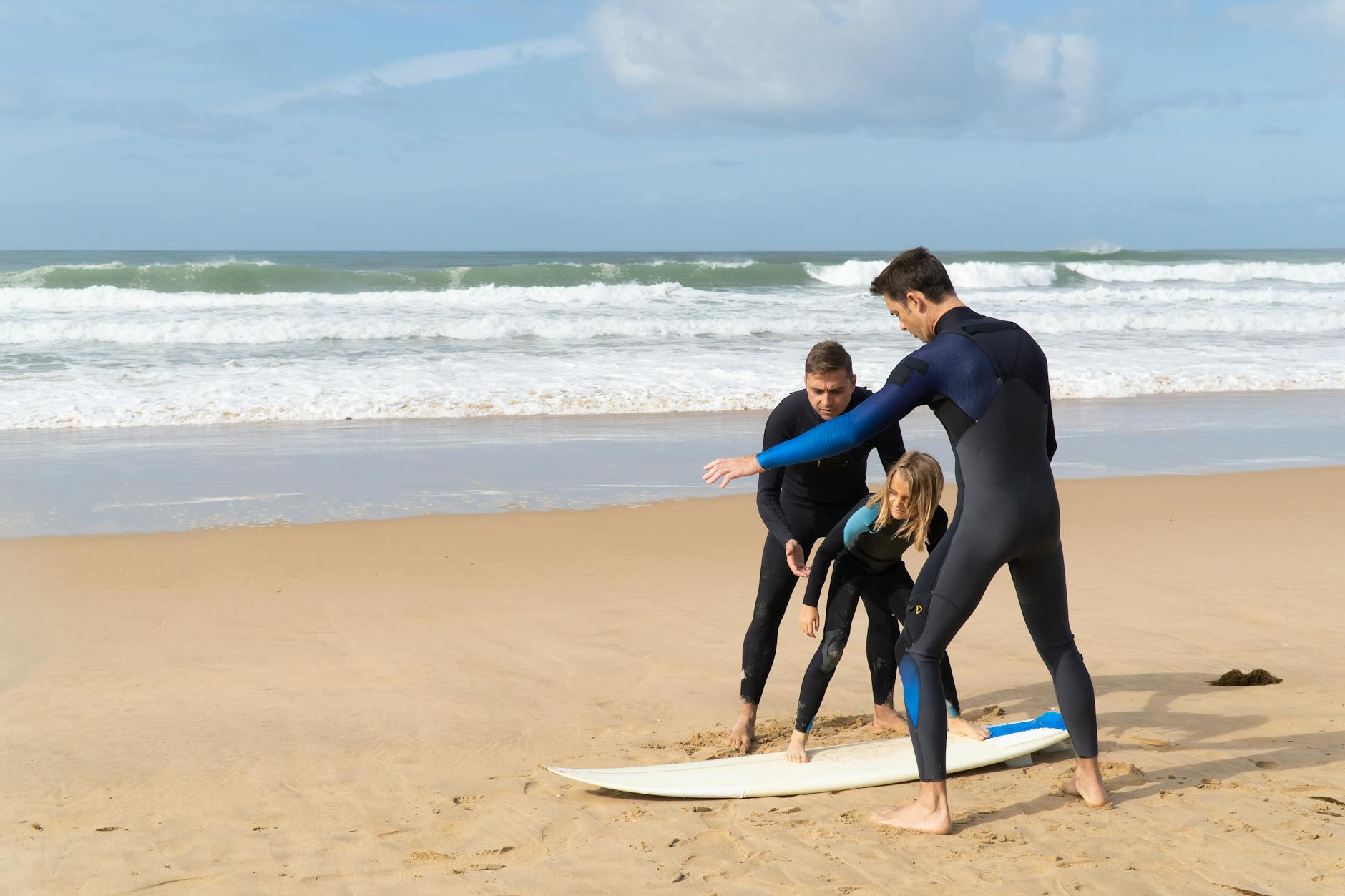
- Session one – land-based fundamentals: Before you go anywhere near the water, a good coach will spend significant time on the beach. You will learn how to read the surf, identify rip currents, understand the basic etiquette of the line-up, and practise the pop-up technique on dry sand. This is unglamorous but essential.
- Session two – first water entry: You will practise paddling technique in the white water (the broken, foamy water close to shore), learning how to position yourself on the board, how to paddle efficiently, and how to fall safely. Safety is covered here in detail, including how to protect your head when you wipe out.
- Session three – catching white water waves: This is where you will attempt your first pop-up on an actual wave. Expect to spend most of this session falling off. That is entirely normal. The coaching focus is on timing the pop-up correctly and finding a stable stance.
- Session four – building consistency: With the mechanics beginning to stick, coaches will focus on reading individual waves, improving your paddle timing, and helping you understand why some waves are working and others are not.
- Session five – introduction to green waves: More advanced beginner sessions will start to move you away from white water and towards unbroken green waves, which require earlier takeoffs and greater commitment. Not every beginner course reaches this stage; it depends on the conditions and the individual’s progress.
- Session six – consolidation and next steps: The final session typically reviews what you have learned and gives you guidance on how to continue progressing independently or through the club’s intermediate programme.
Equipment is usually provided as part of a beginner course – a foam or soft-top board (commonly called a foamie or a Mini Mal) and a wetsuit. In UK waters, a decent wetsuit is non-negotiable at any time of year. In winter, water temperatures off the Cornish coast drop to around 9-10°C. Even in August, you are unlikely to be comfortable without at least a 3/2mm suit. Most clubs will hire wetsuits to members at a reduced rate even after the beginner course ends.
Surf Lifesaving Clubs: A Distinct but Related Community
It is worth distinguishing between surf clubs and surf lifesaving clubs, as newcomers frequently confuse the two. Surf lifesaving clubs – affiliated with the Royal Life Saving Society UK or Surf Life Saving GB – focus on ocean rescue skills, fitness, and competition disciplines such as beach sprints, board racing, and surf boat rowing. They do not typically teach surfing in the recreational sense, though members are often strong surfers.
That said, surf lifesaving clubs are excellent environments for water confidence, ocean awareness, and physical fitness. Many surfers belong to both a surf club and a surf lifesaving club, and the crossover in culture is significant. If you are new to the coast and want to build broader ocean skills alongside your surfing, looking into your local surf lifesaving club is time well spent.
Online Communities and Social Media Groups
The offline club structure is important, but the UK surfing community also operates through a sprawling network of online groups, forums, and social media communities. These are worth knowing about, particularly if you live far from the coast and cannot attend regular club sessions.
The Magic Seaweed and Windguru forecast communities have long-established forums where UK surfers discuss conditions, spots, and equipment. Facebook groups such as UK Surf Community and regional equivalents (Cornwall Surfers, Wales Surf Community, and so on) are active and generally welcoming to beginners, provided you approach with genuine curiosity rather than demanding local secrets. Asking about beginner-friendly spots, suitable equipment for your budget, or recommended coaches will almost always generate helpful responses.
Instagram and YouTube are useful for learning visual technique – watching experienced surfers and understanding body mechanics is genuinely instructive – but be cautious about taking instruction too literally from content creators who are not qualified coaches. What looks straightforward on a highlight reel frequently conceals years of muscle memory and contextual knowledge.
Surf School vs. Surf Club: Understanding the Difference
A surf school is a commercial operation that offers lessons, typically to tourists and short-term visitors. Schools in Newquay, Croyde, and Lahinch on the Irish border operate to high standards and are a perfectly good way to get your first experience of surfing. However, they are not clubs. Once your lesson is over, the relationship ends. You receive no ongoing coaching structure, no community, and no organised access to water time beyond what you pay for session by session.
A surf club, by contrast, is a membership organisation. You pay an annual subscription – typically between £30 and £100 for adults, depending on the club and its facilities – and in return you gain access to regular coached sessions, club events, informal surf meetups, and a peer group of people at similar stages of learning. Many clubs also offer discounts on coaching, equipment hire, and entry to
competitions and events. For younger surfers, club membership often unlocks access to regional and national development pathways that simply are not available to those surfing independently.
The social dimension of club membership is difficult to overstate. Surfing can be an isolating pursuit when you are learning — sessions are short, conditions are inconsistent, and progress can feel slow without guidance or encouragement. A club provides a ready-made network of people who understand those frustrations, share information about local breaks and conditions, and will turn up to surf on a grey Tuesday morning in November simply because they said they would. That reliability, and the accountability that comes with it, tends to accelerate improvement in a way that solo practice rarely does. Many surfers who joined a club as complete beginners cite the relationships formed there as the primary reason they stuck with the sport through the difficult early stages.
Clubs vary considerably in their size, culture, and focus. Some are affiliated with Surfing England, Surf Wales, or Surfing Scotland and operate within a formal governance structure that includes insurance, qualified coaching standards, and competitive pathways. Others are smaller, informal collectives organised around a particular beach or local community, with a looser structure but an equally strong sense of shared purpose. Both models have genuine merit depending on what a surfer is looking for. The key distinction is not between formal and informal, but between organised community and the absence of one.
Whether you are surfing your first green wave or working towards your first competition, joining a club is one of the most straightforward decisions available to you. The cost is modest, the benefits are tangible, and the people you meet through a club will almost certainly shape your surfing life far more than any single lesson or equipment purchase ever could.