The Best UK Surf Schools for Beginners
The Best UK Surf Schools for Beginners
Standing on a beach with a surfboard under your arm, staring out at the Atlantic, can feel equal parts thrilling and terrifying. The waves look bigger from the shoreline. The wetsuit feels unfamiliar. And everyone else in the water seems to know exactly what they are doing. If that sounds like you, take a breath — every surfer in that ocean started exactly where you are standing right now. The UK is one of the finest places in the world to learn to surf, with consistent waves, a genuinely welcoming surf community, and a growing network of professional surf schools that make the learning process safe, structured, and genuinely enjoyable.
This guide will walk you through everything you need to know about finding the right surf school, what to expect from your first lessons, where the best beginner breaks are around the UK coastline, and how to keep progressing long after your first session ends. Whether you are based in Cornwall, Yorkshire, Wales, or Scotland, there is a wave out there with your name on it.
Why the UK is a Brilliant Place to Learn to Surf
Britain does not always get the credit it deserves as a surf destination. Most people picture Hawaii or Australia when they think of surfing, but the UK boasts over 11,000 miles of coastline and receives powerful Atlantic swells that produce world-class waves — particularly along the south-west and north-west coasts. Fistral Beach in Newquay, Croyde in Devon, Llangennith in the Gower Peninsula, and Thurso in the far north of Scotland are all spots that serious surfers travel internationally to visit.
For beginners, the UK surf environment offers some distinct advantages. Water temperatures, while cold, are perfectly manageable with the right wetsuit. The surfing community here is notably friendly and supportive toward newcomers. And crucially, the beginner-friendly beach breaks found at spots like Saunton Sands, Whitesands Bay in Pembrokeshire, and Belhaven Bay in East Lothian produce the kind of gentle, consistent, rolling waves that are ideal for learning — not the hollow, fast-breaking barrels that make life difficult for first-timers.
What to Look for in a UK Surf School
Not all surf schools are created equal. Choosing the right one can make the difference between a frustrating afternoon and a life-changing experience. Here are the key things to look for before you book.
- Surf Life Saving Association (SLSA) or British Surfing accreditation: Reputable UK surf schools should hold accreditation from British Surfing, the national governing body. This ensures instructors are qualified, safety protocols are in place, and the equipment meets recognised standards. Never book with a school that cannot demonstrate proper accreditation.
- Qualified instructors: Instructors should hold a British Surfing Level 1 or Level 2 coaching qualification at minimum. Many schools will also have coaches with Surf Life Saving qualifications, which is particularly reassuring for complete beginners.
- Small group sizes: Look for a maximum ratio of around six to eight students per instructor. Smaller groups mean more personalised feedback, closer supervision in the water, and a much better learning experience overall.
- Equipment included: Good beginner surf schools provide everything — a soft-top foam surfboard (often called a foamie or mal), a full wetsuit, and boots or gloves during colder months. You should not need to bring anything other than yourself and a towel.
- Beach safety briefing: Every legitimate surf school begins lessons on the sand with a thorough safety briefing covering rip currents, surfboard etiquette, right of way rules, and how to fall safely. If a school skips this, walk away.
- Positive reviews from beginners specifically: Plenty of surf schools are brilliant at coaching intermediate surfers but less patient or structured with absolute beginners. Read reviews on Google, Tripadvisor, or the school’s own social media and look specifically for comments from first-timers.
The Best UK Surf Schools for Beginners
The following schools consistently earn high praise for their beginner programmes, qualified instructors, and welcoming atmosphere. This is not an exhaustive list, but it represents some of the finest options across different regions of the UK.
Surfing GB / British Surfing (Cornwall): British Surfing is headquartered in Newquay and offers a directory of officially accredited schools across the country. Using their website to find a local school is the single most reliable way to ensure you are booking with a legitimate, safety-conscious operation. Newquay itself is arguably the surf capital of the UK, and schools based there — including Escape Surf School, Newquay Activity Centre, and Extreme Academy — offer year-round beginner lessons with excellent infrastructure.
Croyde Surf School (Devon): Croyde is a gorgeous North Devon village with a beach that produces reliable beginner-friendly waves. Several schools operate here, including Surf South West, which has been running lessons for over two decades and is widely regarded as one of the most professional operations in the South West. Their instructors are patient, encouraging, and highly experienced with nervous first-timers.
PBA Surf School (Pembrokeshire, Wales): The Welsh coastline is seriously underrated as a surf destination. Pembrokeshire in particular has stunning beaches and consistent Atlantic swell. PBA Surf School, based at Newgale and Whitesands Bay, is fully accredited and runs beginner group lessons as well as private tuition. Wales also benefits from slightly fewer crowds than Cornwall during peak summer season, which makes the learning environment calmer and more relaxed.
Lusty Glaze Adventure (Newquay, Cornwall): Operating from the beautiful private beach of Lusty Glaze Cove, this school has a strong reputation for high-quality beginner instruction in a slightly more sheltered environment than the exposed beaches nearby. The intimate setting means groups stay small and instruction feels genuinely personal.
Gower Surf School (Swansea, Wales): Based on the Gower Peninsula — officially the UK’s first Area of Outstanding Natural Beauty — Gower Surf School runs lessons at Llangennith, a long, sandy beach with consistent waves. The instructors here are well regarded for making absolute beginners feel comfortable and capable from the very first session.
Cold Hawaii Surf School (Yorkshire): Yes, Yorkshire. Saltburn-by-the-Sea and the surrounding North Yorkshire coast have a thriving surf scene, and the local nickname “Cold Hawaii” captures both the humour and the genuine quality of the waves. For anyone based in the north of England, this is a fantastic option with schools that understand the colder conditions and equip students accordingly.
What Happens in Your First Surf Lesson
Knowing what to expect beforehand takes a lot of the anxiety out of the experience. A typical beginner surf lesson in the UK lasts around two hours and follows a fairly consistent structure across most accredited schools.
- Kit up: You will be fitted with a wetsuit appropriate for the season and water temperature. In winter this might be a 5/4mm suit with boots, gloves, and a hood. In summer, a 3/2mm suit is usually sufficient. A good school will ensure your wetsuit fits properly — too loose and it will fill with cold water.
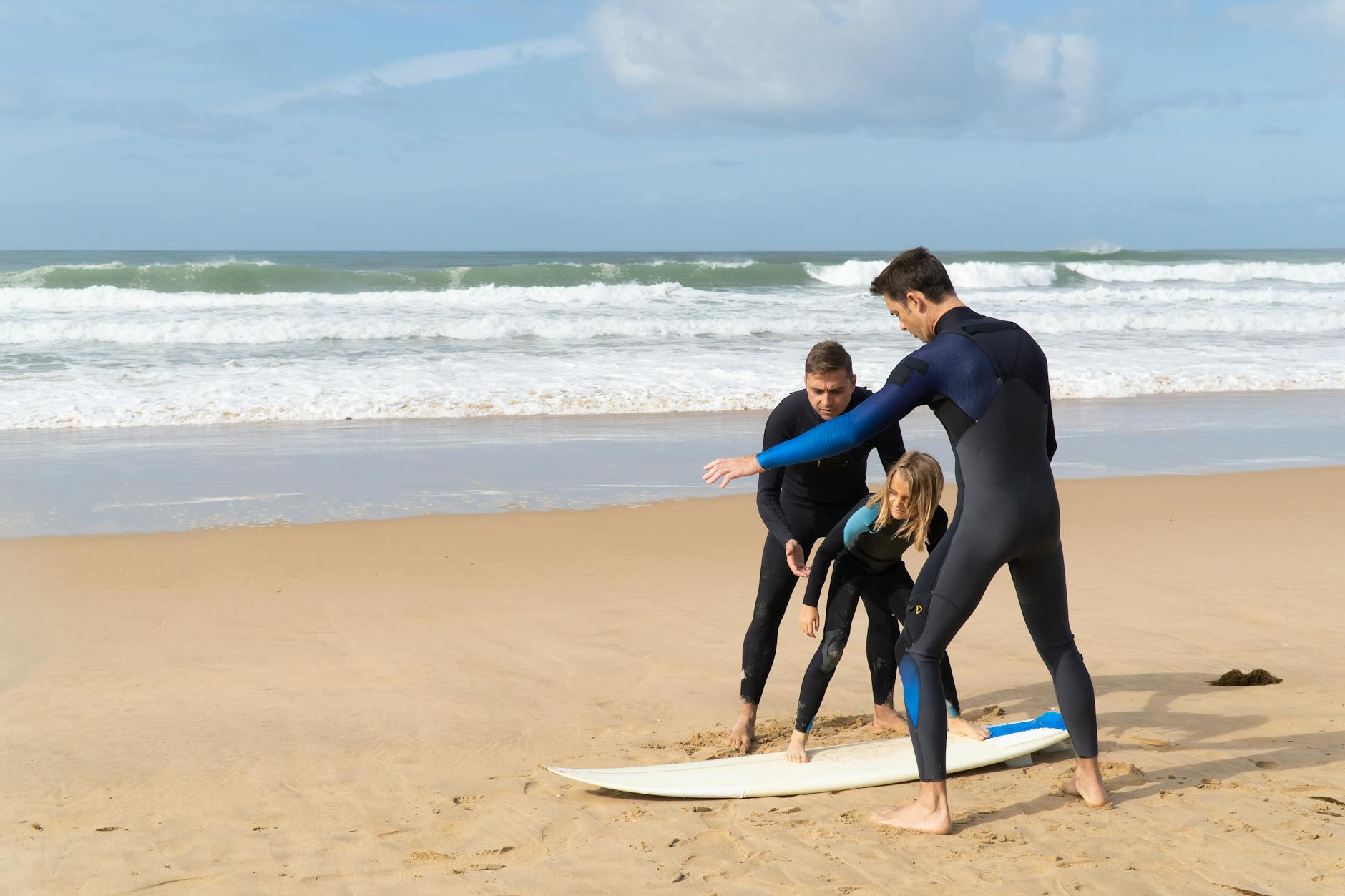
- Land-based safety briefing: Before you go anywhere near the water, your instructor will explain the layout of the beach, point out any rip currents or hazards, and run through the basic rules of surf etiquette — including who has right of way on a wave.
- Pop-up practice on the sand: The “pop-up” is the fundamental movement of surfing — going from lying flat on your board to standing up in one fluid motion. You will practise this repeatedly on dry land until it starts to feel natural. This is not glamorous, but it is absolutely essential.
- Entering the water: Your instructor will take the group into the white water — the broken, foamy section of waves closest to shore. This is where beginners learn. You are not heading for the open ocean on day one.
- Catching your first waves: The instructor will push you into waves as you begin to understand the timing. Your first successful ride — even if it only lasts a second or two — will produce a feeling that is genuinely hard to describe. Most people are hooked immediately.
- Feedback and coaching: Throughout the session, your instructor will watch, correct your stance, and offer encouragement. Good instructors know when to push and when to simply let you enjoy the moment.
- Debrief: Back on the beach, the instructor will summarise what you did well, what to work on, and what the next steps in your progression might look like.
Practical Kit and What You Actually Need
As a complete beginner, you do not need to buy any equipment before your first few lessons. Everything will be provided by the school, and it makes no sense to invest in your own gear until you are sure surfing is something you want to continue. That said, if you catch the bug — and most people do — here is a sensible guide to what you will eventually need.
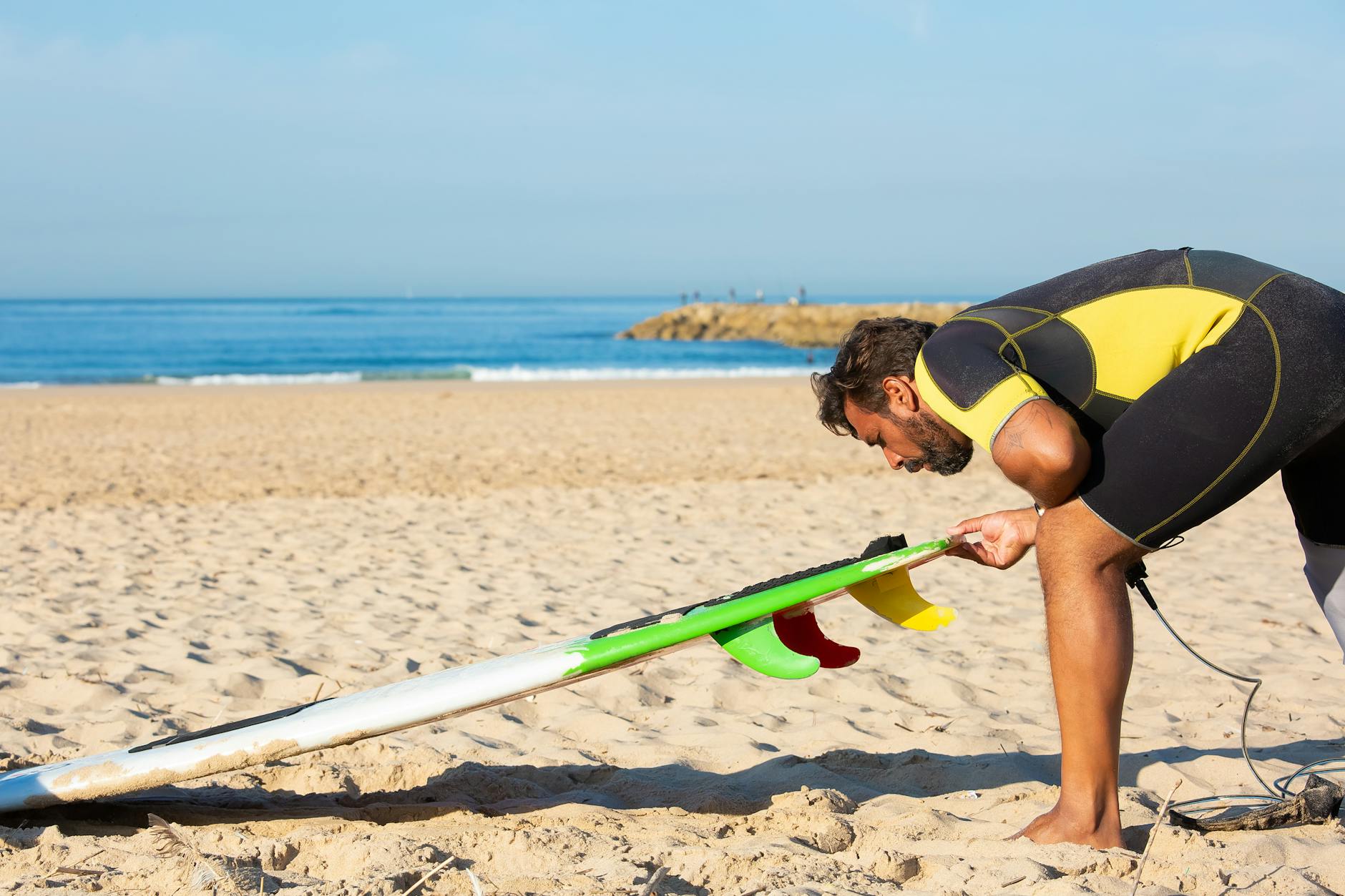
Your first board should be a large, soft-top foam board. Something in the region of 8 to 9 feet long with plenty of volume. Foam boards are forgiving, buoyant, and much safer in the water around other surfers. Brands such as Foamie, Softech, and Torq are popular in the UK market and widely available from surf shops in Newquay, Croyde, and online retailers like Surfdome or Saltrock. Resist the temptation to buy a small, narrow shortboard early on. Experienced surfers make shortboards look effortless. For a beginner, they are extremely difficult to paddle, catch waves on, and stand up on. Stick with volume.
A good wetsuit is worth investing in properly. The UK sea temperature ranges from around 7°C in February to perhaps 18°C in August, depending on the region. A quality 4/3mm or 5/4mm suit will see you through most of the year. Brands such as O’Neill, Rip Curl, Billabong, and Patagonia all produce excellent wetsuits with UK stockists nationwide. A well-fitting suit will keep you warm enough to stay in the water longer, which means more practice time and faster progression.
You will also need surf wax to keep your feet
gripping the board. Apply it in circular motions across the deck before each session, building up a layer that gives your feet something to hold onto. The type of wax you need depends on water temperature, so pick up a cold or cool water formula for UK conditions — applying a warm water wax in a British winter will leave you sliding straight off. A traction pad fixed to the tail of the board is another option, particularly useful once you start practising your pop-up consistently and want a reliable back foot position.
Beyond the essentials, there are a few extras worth considering as you progress. A good bag or board sock will protect your board from dings during transport, and a changing robe or dry robe has become something of a staple at UK car parks — practical for stripping out of a cold wetsuit in a blustery seafront car park without putting on a show for passing dog walkers. Sunscreen is worth applying even on overcast days, particularly if you are spending several hours on the water, and a dedicated surf-specific brand will hold up better against repeated immersion than a standard high-street variety.
None of this kit needs to be bought all at once. Most beginners hire equipment through their surf school for the first several sessions, which is sensible — there is little point spending several hundred pounds on a board before you know whether surfing is something you want to pursue seriously. Once you are confident it is, buying second-hand is a perfectly reasonable route into ownership, and most surf schools and local shops will point you in the right direction.
Finding the right surf school sets the tone for everything that follows. The UK coastline offers a genuinely varied and rewarding introduction to the sport, with qualified instructors, excellent breaks, and a welcoming community of surfers at every level. Whether you head to Newquay for its well-established infrastructure, Pembrokeshire for its wilder character, or the surf towns of North Devon for something in between, there is a school out there suited to your pace, your budget, and the experience you are looking for. Take a lesson, get in the water, and let the progression happen naturally.