UK Wetsuit Thickness Guide: What to Wear in Each Season
UK Wetsuit Thickness Guide: What to Wear in Each Season
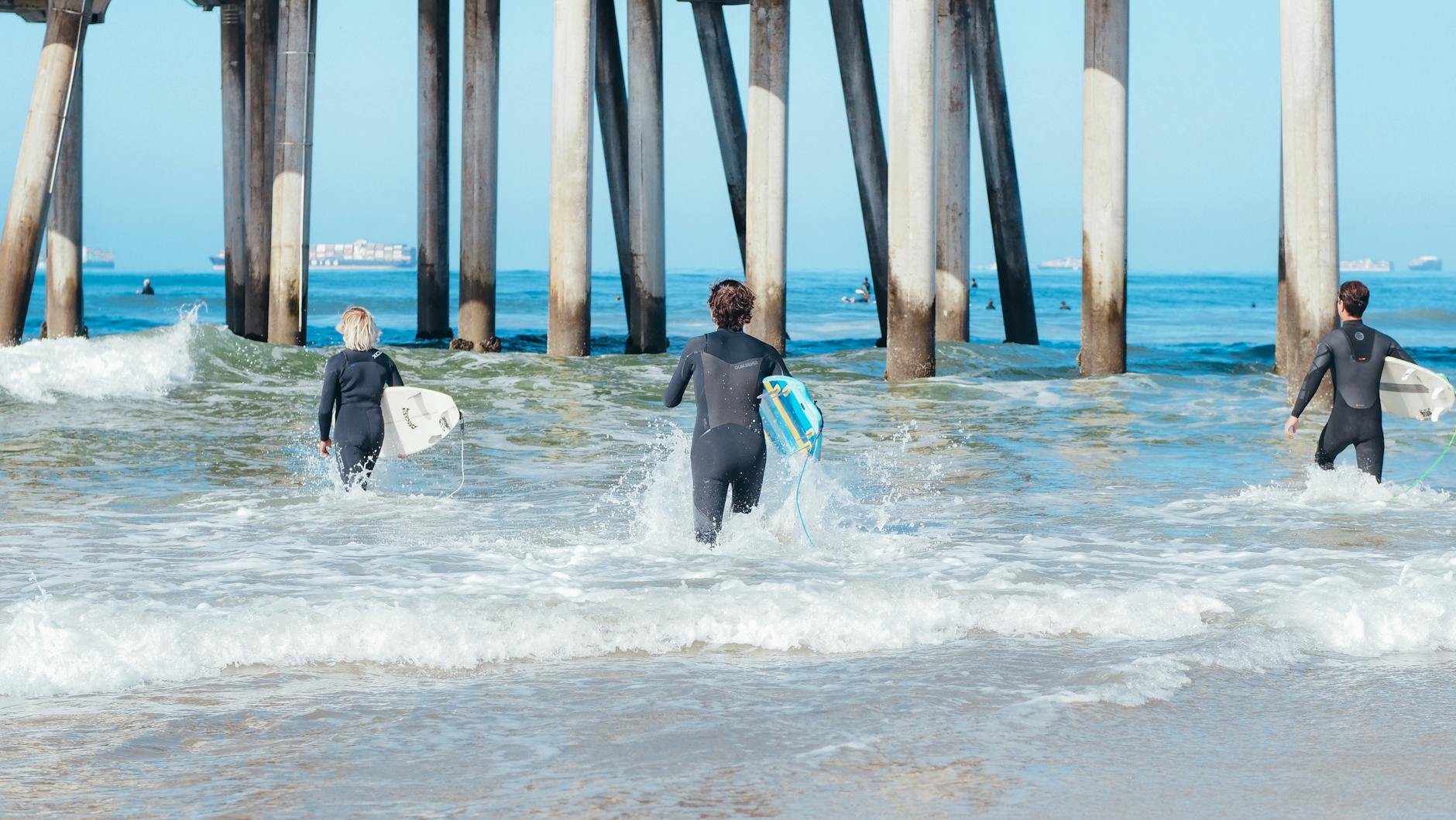
If you’ve ever stood on a beach in Cornwall in February watching surfers paddle out and thought “how on earth are they not dead?”, the answer is almost certainly a good wetsuit. Getting your wetsuit thickness right is one of the most important things you can do as a beginner surfer in the UK. Too thin and you’ll be shivering your way back to the car park after twenty minutes. Too thick and you’ll be so stiff you can barely pop up on the board.
The UK is a brilliant place to learn to surf. We’ve got some world-class breaks — Fistral in Newquay, Croyde in North Devon, Thurso East in Scotland, Llangennith in Wales — but our waters are cold. Even in summer, the sea temperature around most of Britain rarely climbs above 17°C or 18°C, and in winter it can drop to a teeth-chattering 7°C or 8°C in some spots. That means wetsuits aren’t optional here. They’re essential kit, twelve months of the year.
This guide will walk you through exactly what to wear in each season, how wetsuit thickness ratings work, and what extra gear you’ll need to stay warm and comfortable in the water. By the end of it, you’ll know exactly what to look for before you buy or hire your first suit.
Understanding Wetsuit Thickness Ratings
Wetsuits are rated by thickness, measured in millimetres, and you’ll usually see two or three numbers separated by slashes — something like 3/2, 4/3, or 5/4/3. This isn’t as complicated as it looks.
The first number refers to the thickness of the neoprene across the chest and back — the core areas where warmth matters most. The second number is the thickness across the arms and legs, where you need a bit more flexibility to paddle and move. If there’s a third number, that applies to a specific panel, usually the lower legs or arms, where extra flexibility is prioritised.
So a 5/4/3 wetsuit has 5mm of neoprene on the body, 4mm on the legs, and 3mm on the arms. A 3/2 has 3mm on the body and 2mm on the limbs. The thicker the suit, the warmer it is — but also the less flexible, so there’s always a balance to strike.
Most wetsuits also come in two styles: full suits (covering the whole body, sometimes called steamers) and shorties (short legs and short arms, more like a thick swimsuit). In the UK, you’ll almost never need a shorty as your primary suit. Full suits are what you want, at least for most of the year.
Winter: November to February
Right, let’s start with the tough end of the scale. British winter surfing is not for the faint-hearted, but plenty of people do it and genuinely love it. The crowds thin out, the swells often get bigger and cleaner, and there’s something deeply satisfying about getting out there when everyone else is wrapped up indoors.
Water temperatures in winter typically sit between 7°C and 10°C around England, Wales, and southern Scotland. In the far north — around Thurso, for example — it can feel even colder. At these temperatures, you need serious insulation.
For winter surfing, you’re looking at a 5/4mm or 5/4/3mm wetsuit as a minimum. Many experienced surfers opt for a 6/5mm in the coldest months, particularly in Scotland or the north of England. These are substantial suits — thick, heavy, and much less stretchy than summer options — but they’ll keep you in the water long enough to actually improve.
Crucially, the suit itself is only part of the story in winter. You’ll also need:
- Wetsuit boots: At least 5mm thick, ideally with a split toe design for better grip on the board. Your feet lose heat incredibly quickly in cold water, and cold feet will end your session faster than anything else.
- Wetsuit gloves: 5mm mittens or gloves. Yes, mittens feel awkward at first. Yes, they’re worth it. Some surfers prefer three-finger “lobster claw” gloves as a compromise between warmth and dexterity.
- Wetsuit hood: A 3mm or 5mm hood is a game changer in winter. You lose a huge amount of body heat through your head. Some winter suits come with an integrated hood, which is even better.
As a beginner, winter might not be the ideal time to start — the waves are often more powerful and the conditions more demanding — but if you’re continuing into winter after starting in autumn, this is the kit you need. Brands like Rip Curl, O’Neill, Patagonia, and Billabong all produce excellent winter suits. UK-based retailers like Wetsuit Centre, Surfdome, and Tiki are worth checking out for competitive prices.
Spring: March to May
Spring is arguably the trickiest time of year when it comes to wetsuits, because the water temperature lags behind the air temperature by quite a bit. You might have a warm, sunny day in April with the air sitting at 15°C, step into the sea, and find it’s still only 9°C or 10°C. Don’t be fooled by blue skies.
For early spring — March and into April — you’ll still want a 5/4mm suit, along with boots and probably gloves. As spring progresses into May and the water starts to creep up towards 12°C or 13°C, you can often drop to a 4/3mm suit and may be able to leave the gloves behind, though boots are still a good idea.
Spring does bring some lovely conditions, particularly along the Atlantic-facing coasts of Cornwall, Devon, and west Wales. The swells from winter storms are still rolling through, but with longer periods between sets, which makes them a bit more manageable for beginners. Early mornings in spring can be beautiful — calm, uncrowded, and the low light makes everything look spectacular.
One tip for spring: check the specific sea temperature for your local spot, not just general forecasts. Sites like Magic Seaweed (now Surfline), Windguru, and the BBC Weather Coastal pages all carry sea temperature data. A couple of degrees makes a real difference to how long you can comfortably stay in the water.
Summer: June to August
Summer is when most beginners take their first lesson, and it’s the friendliest time to get started. Sea temperatures around the south-west of England — Cornwall, Devon — typically reach 16°C to 18°C at their warmest, usually in August. Wales and the north of England sit a degree or two cooler. Scotland rarely gets much above 14°C even in summer.
For summer surfing in England and Wales, a 3/2mm full suit is the standard choice. It gives you enough warmth to stay in for a proper session without making you feel like you’re wearing a suit of armour. In the very warmest conditions — a scorching August day in Cornwall with the water at 18°C — some experienced surfers switch to a shorty or even a rash vest and board shorts. As a beginner, stick with the 3/2. You’ll be spending a lot of time falling off, sitting on your board, and generally being less active than you will once you’re more competent, so you need more insulation than you might expect.
In Scotland, even in July and August, you’re better off with a 4/3mm suit and probably still wearing boots. The water genuinely doesn’t warm up the way it does further south.
Summer is also when surf schools are at their busiest. If you’re taking lessons — which is absolutely the right way to start — the school will usually provide wetsuits as part of the session. Places like Escape Surf School in Newquay, Surf South West in Croyde, and various BSA (British Surfing Association) accredited schools across the UK offer well-maintained rental kit. Once you know you’re going to stick with surfing, investing in your own suit makes sense both financially and hygienically.
Autumn: September to October
Autumn is a favourite time of year for many surfers in the UK, and for good reason. The summer crowds have gone, but the water is still relatively warm from months of sun. September in particular can feel like the best of both worlds — decent swell, manageable temperatures, and far fewer people in the water.
In early autumn, a 3/2mm suit will still serve you well. By October, as water temperatures start dropping back towards 13°C or 14°C, you’ll want to move up to a 4/3mm suit. Some surfers hold out in their 3/2 through October, but you’ll notice the chill creeping in, especially on longer sessions or in windier conditions.
Autumn swells are often excellent for learning. The summer’s small, mushy waves give way to more consistent, better-shaped surf as Atlantic storms start to track further south. For a beginner who’s been practising through the summer, autumn is a great time to push your skills on slightly bigger waves.
How to Choose the Right Wetsuit: Practical Steps
Knowing the right thickness is one thing. Actually buying a wetsuit that fits and works properly is another. Here’s how to approach it:
- Get measured properly. Wetsuit sizing varies significantly between brands. Don’t assume your clothing size will translate directly. Most brands publish detailed size guides based on height, weight, and chest measurement. Use them.
- Try before you buy where possible. Many surf shops — particularly those in surf towns like Newquay, St Ives, Croyde, and Tenby — will let you try suits on in-store. A wetsuit should feel snug but not restrictive. You shouldn’t be able to pinch much excess material anywhere.
- Check the seams. Flatlock seams are stitched flat and are fine for warmer water but let in some water. Glued and blind-stitched (GBS) seams are sealed properly and much warmer — essential for UK winter use. Sealed and taped seams are the warmest of all, found on top-end suits.
- Look at the zip or entry system. Back-zip suits are easier to get on and off, which matters when you’re a beginner.