Beginner Surfing Camps in the UK: What to Expect
Beginner Surfing Camps in the UK: What to Expect
The UK might not be the first place that springs to mind when you think of surfing, but the country’s Atlantic-facing coastline produces some genuinely world-class waves. From the rugged headlands of Cornwall to the exposed beaches of North Devon, Pembrokeshire, and the Outer Hebrides, Britain offers a remarkable range of surf conditions – and an equally impressive selection of surf camps designed specifically for beginners. If you have been thinking about giving surfing a go and want to do it properly, a structured surf camp is one of the most effective ways to start.
This guide covers everything a complete beginner needs to know before booking a UK surf camp: what the experience actually involves, what to bring, where to go, how to stay safe, and how to get the most out of your time in the water.
Why Choose a UK Surf Camp Over Going It Alone?
It is entirely possible to buy a secondhand board, watch a few videos online, and head to the beach on your own. Many people do exactly that, and many of those people develop bad habits that take years to unlearn. A surf camp, by contrast, gives you qualified instruction from day one.
UK surf schools operating as camps are typically accredited by Surfing England, Surf Wales, or Surfing Scotland – the national governing bodies that set the standard for coaching qualifications and safety procedures. Instructors at these camps hold at minimum a Level 1 or Level 2 coaching certificate, and many hold beach lifeguard qualifications as well. That combination of surfing knowledge and water safety training makes a significant difference when you are learning in an unfamiliar ocean environment.
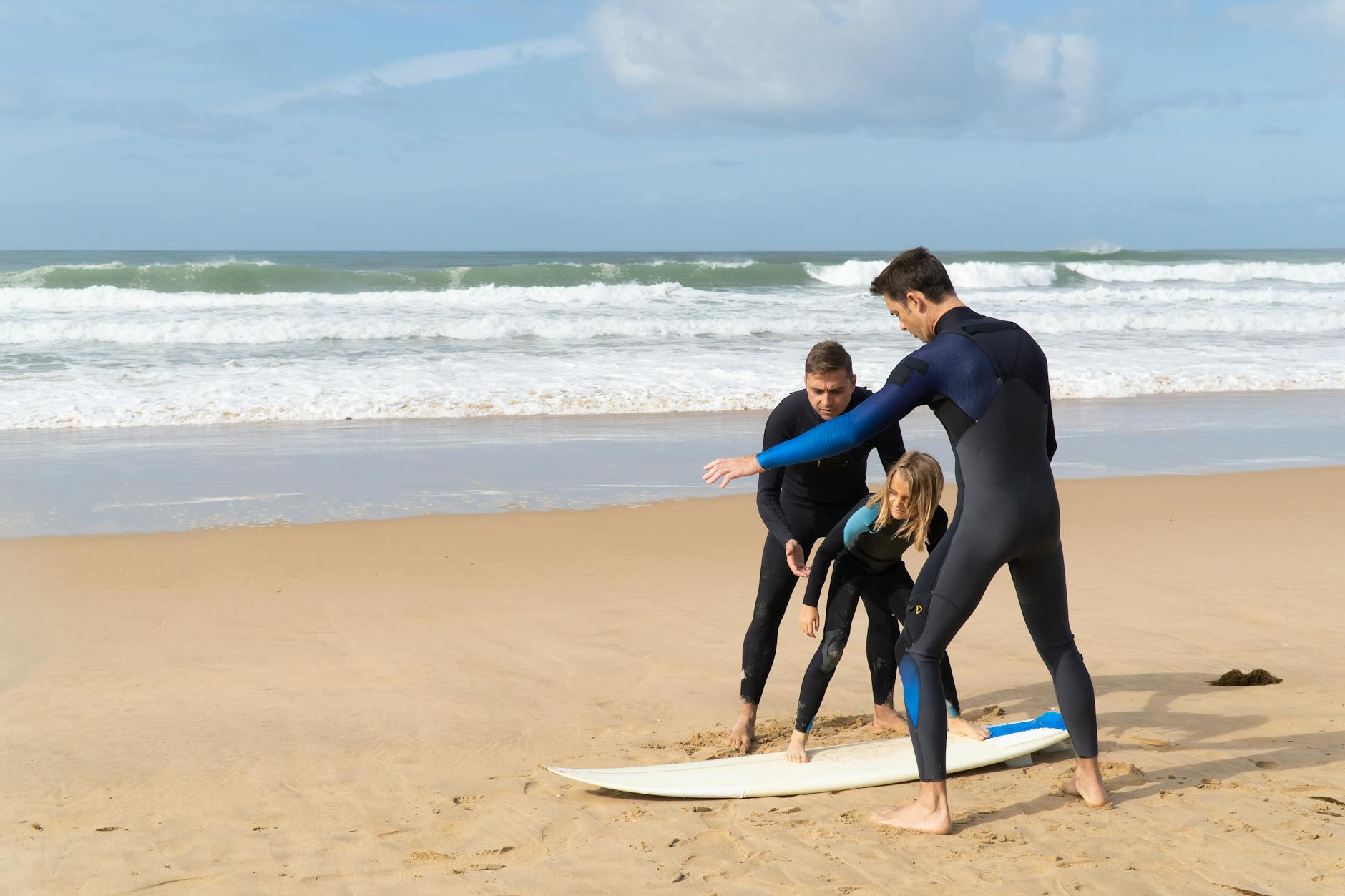
Beyond safety, camps provide structure. You are not just handed a board and pointed at the sea. Sessions are typically broken into land-based warm-ups and theory, shallow-water exercises, and then progressive time in the surf itself. You receive real-time feedback, which accelerates progress enormously compared to self-teaching.
Where Are the Best Beginner Surf Camps in the UK?
Cornwall remains the heartland of UK surfing, and it is home to the highest concentration of surf camps in the country. Newquay is the most well-known base, with beaches such as Fistral, Towan, and Watergate Bay all hosting schools and camps throughout the year. Croyde in North Devon is another popular destination, offering a slightly smaller, more relaxed atmosphere. For those in Wales, Llangennith on the Gower Peninsula and Newgale in Pembrokeshire both have established surf schools running residential camp programmes.
Further north, Bundoran in Ireland is just across the border and worth mentioning for those travelling from Northern Ireland. Within Scotland itself, Thurso and Tiree have a dedicated surf culture, though conditions there tend to suit more experienced surfers. For a beginner camp experience in Scotland, Dunbar on the east coast or Coldingham Bay in the Scottish Borders offers calmer, more manageable surf.
The key point when choosing a location is wave quality relative to your ability. As a beginner, you want consistent, slow-breaking, crumbling waves rather than powerful, steep beach breaks. Ask the camp organisers directly about typical wave conditions for the time of year you plan to visit.
What Does a Typical Day at a Surf Camp Look Like?
Programmes vary between operators, but most residential beginner surf camps in the UK follow a broadly similar daily structure. Here is a realistic outline of what your day might look like:
- Morning briefing and warm-up (7:30am – 8:30am): Most camps align sessions with tidal conditions, so start times shift daily. The morning begins with a group warm-up on the beach or in the camp grounds, covering dynamic stretching and mobility work relevant to surfing movements.
- Land-based instruction (8:30am – 9:00am): Before you go anywhere near the water, instructors run through the session’s focus on dry land. This might cover pop-up technique, reading waves, surf etiquette, or rip current awareness depending on where you are in the programme.
- Morning surf session (9:00am – 11:00am): Supervised surf session in the water, with instructors both on the beach and in the water with you. Groups are typically kept small – usually no more than eight students per instructor.
- Breakfast or brunch (11:00am – 12:00pm): Many residential camps include catered meals. Expect hearty, carbohydrate-rich food. Surfing is physically demanding, and you will be genuinely hungry.
- Afternoon session or free time (2:00pm – 4:30pm): A second surf session, timed around the tide. Some camps use the afternoon for theory workshops, video analysis of your surfing, or ancillary activities such as yoga or paddleboarding.
- Evening debrief and social time: Many camps end the day with a group debrief, reviewing progress and setting goals for the following day. The social element of camp life is a significant part of the experience – most people find that the friendships formed at surf camp are a highlight of the whole trip.
What Equipment Will You Use?
All reputable beginner surf camps provide full equipment as part of the package. You will not need to buy or bring your own board unless you specifically want to. Here is what you can expect to be provided:
- Foamie (soft-top) surfboards: Beginners almost universally start on foam boards, which are typically 8 to 9 feet long. They are more buoyant, more stable, and considerably safer than fibreglass boards. Brands commonly used at UK camps include Softech, Catch Surf, and NSP.
- Wetsuits: Given the UK’s water temperatures – which range from around 8°C in winter to roughly 17°C in summer off Cornwall – a wetsuit is not optional, it is essential. Camps will provide wetsuits, typically 3/2mm or 4/3mm depending on the season. In winter months, you may also be given boots, gloves, and a hood.
- Leg rope (leash): This is the cord that attaches your ankle to the board, preventing it from washing away when you fall off. It will be fitted for you.
- Rash vest or impact vest: Many camps provide these as an additional layer of protection and insulation, worn underneath the wetsuit.
When you arrive, an instructor will help you select the correct wetsuit size and fit it properly. A poorly fitted wetsuit flushes cold water continuously, which makes for a miserable session – so it is worth spending a few minutes getting the sizing right.
What to Bring With You
Even though equipment is provided, there are several personal items worth packing. This list applies to both day camps and residential programmes:
- Swimwear to wear under your wetsuit (board shorts or a swimsuit – avoid anything with metal zips or large seams)
- A large, warm towel or a changing robe (brands like Dryrobe and Saltrock are popular in the UK surf community and genuinely useful)
- Flip flops or old trainers for walking to and from the beach
- Sun cream rated SPF 30 or higher – ocean reflection intensifies UV exposure even on overcast UK days
- A reusable water bottle – hydration matters more than you might expect during surf sessions
- Ibuprofen or similar anti-inflammatory – your shoulders, arms, and lower back will feel the first few sessions
- Warm layers for evenings, particularly if you are based in Cornwall or Wales where sea breezes can be sharp even in July
- A waterproof bag or dry bag for valuables while you are in the water
Understanding UK Beach Safety and Surf Etiquette
One of the most valuable things a surf camp teaches beginners is not technical surfing skill – it is beach and ocean awareness. UK beaches with surf tend to be patrolled by the Royal National Lifeboat Institution (RNLI) during peak season, typically from May to September. On patrolled beaches, the RNLI flags a designated bathing area marked by red and yellow flags. Surfers must use the area marked by black and white chequered flags. Your instructors will make this clear, but it is worth knowing before you arrive.
Rip currents are the primary hazard on UK surf beaches. A rip is a channel of water moving away from the shore, and they occur on most sandy beaches with breaking waves. Camp instructors will teach you how to identify rips by looking for discoloured, choppier water between breaking waves, and how to respond if you find yourself caught in one (paddle across the rip, not against it, to exit the channel).
Surf etiquette – the unwritten rules of who has the right of way on a wave – is also covered in most beginner programmes. The core principle is that the surfer closest to the peak of the breaking wave has priority. Dropping in on another surfer (taking a wave they are already riding) is considered disrespectful and can cause collisions. As a beginner, your camp instructors will guide you to sections of the beach with less crowding, so this is less of an immediate concern – but understanding the rules from the outset sets you up for long-term positive relationships in the water.
Physical Preparation: What Fitness Level Do You Need?
Surfing is more physically demanding than it looks. The majority of time spent surfing is actually spent paddling, not riding waves, and paddling uses the shoulders, chest, and back muscles in ways that most people’s daily routines simply do not address. You do not need to be an athlete to attend a beginner surf camp – the programmes are designed for complete
beginners – but arriving with a reasonable baseline of fitness will make the experience more enjoyable and less physically punishing. If you can swim comfortably, walk for an hour without difficulty, and have no significant upper body injuries, you are well within the range of someone who will cope fine. In the weeks before your camp, even simple additions to your routine – press-ups, swimming, or paddling on a paddleboard if you have access to one – can meaningfully reduce the soreness you will feel after your first sessions in the water.
It is also worth being honest with yourself about flexibility and core strength. Popping up from the prone position to standing – the fundamental movement of surfing – places real demand on the lower back and hip flexors. Instructors at reputable camps are well practised at adapting technique to suit people with limited flexibility, and they will not rush you through progressions. That said, if you have a history of lower back trouble or a knee condition, contact the camp in advance. Most will happily discuss how their programme can be adjusted, and some offer a shallower learning curve for those who need it. Turning up with this information withheld helps no one.
Rest and recovery between sessions matters too. Beginner surf camps typically run two sessions per day, and the fatigue that accumulates – particularly through the shoulders – can catch people off guard. Staying hydrated, eating properly, and sleeping well are not optional extras; they are part of how you get the most from the experience. Camps in Cornwall and Wales often have good local food available nearby, and many surf schools now factor recovery time into their daily schedules rather than packing every available hour with water time.
Conclusion
A beginner surf camp in the UK offers a structured, sociable, and genuinely effective way to get started in the sport. The Atlantic coastlines of Cornwall, Devon, Wales, and the Gower provide consistent enough conditions for learning, and the quality of instruction at established schools is high. You will not master surfing in a weekend – nobody does – but you will leave with a working understanding of wave reading, water safety, and the basic mechanics of riding a wave, along with a clearer sense of whether surfing is something you want to pursue further. For most people who attend, it is.