Surfboard Types Explained: Longboard, Shortboard and Foam
Surfboard Types Explained: Longboard, Shortboard and Foam
Choosing the right surfboard is one of the most important decisions a beginner surfer will make. Walk along the beach at Croyde in Devon, Fistral in Newquay, or Llangennith in the Gower Peninsula, and you will see a wide variety of board shapes being ridden by surfers of all abilities. The sheer range of options can feel overwhelming when you are just starting out. This guide breaks down the three main surfboard categories that matter most to beginners and intermediate surfers in the UK: longboards, shortboards and foam boards. By the end, you will have a clear picture of which board suits your stage of development, your local break, and the often challenging conditions found around the British coastline.
According to Surfing England, there are now over 500,000 regular surfers in England alone, with the number growing steadily each year. The Welsh Surfing Federation and Surfing Scotland both report increased participation following the visibility boost provided by events such as the ISA World Surfing Games and the inclusion of surfing in the Tokyo 2020 Olympic Games. With more people heading to the water than ever before, understanding your equipment is not merely academic — it is a practical necessity for progression and safety.
Why Board Choice Matters in UK Conditions
The United Kingdom does not have the warm, consistent surf associated with Hawaii or Southern California. UK surf is characterised by cold water, variable wind conditions, powerful Atlantic swells in the west, and generally smaller, choppier conditions in the North Sea to the east. The RNLI, which carries out lifeguard operations on hundreds of UK beaches each summer, consistently highlights equipment mismatch as a contributing factor in surf-related incidents. Riding a board that is too small, too thin, or too unstable for your ability level in cold, powerful water significantly increases your risk.
The British Surfing Association, now operating under the umbrella of Surfing England, has long advocated a structured approach to board progression. Their coaching programmes, which are built around the National Surfing Scheme, specifically guide learners through board types in a logical sequence. Understanding that sequence — and the reasoning behind it — will help you make better purchasing decisions and progress more quickly.
Water Temperature and Wetsuit Considerations
It is worth noting that board choice does not exist in isolation. Around most UK coastlines, you will need a wetsuit for the majority of the year. Water temperatures in Cornwall typically range from around 9°C in February to approximately 18°C in August and September. In Scotland, the water rarely exceeds 15°C even in peak summer. A thicker wetsuit adds buoyancy and restricts movement slightly, which is another reason why beginners benefit from boards that offer inherent stability rather than demanding perfect technical positioning from the outset.
Beach and Break Types Around the UK
The UK has a genuinely diverse range of surf breaks. The Atlantic-facing coasts of Cornwall, Devon, Pembrokeshire, and County Antrim in Northern Ireland receive powerful, well-formed swells. The North Yorkshire coast, East Anglia, and parts of Kent receive smaller, often windier surf from the North Sea. A longboard or foam board is generally more versatile across this range of conditions than a high-performance shortboard, which requires a minimum level of power and face to function correctly.
Foam Boards: The Ideal Starting Point
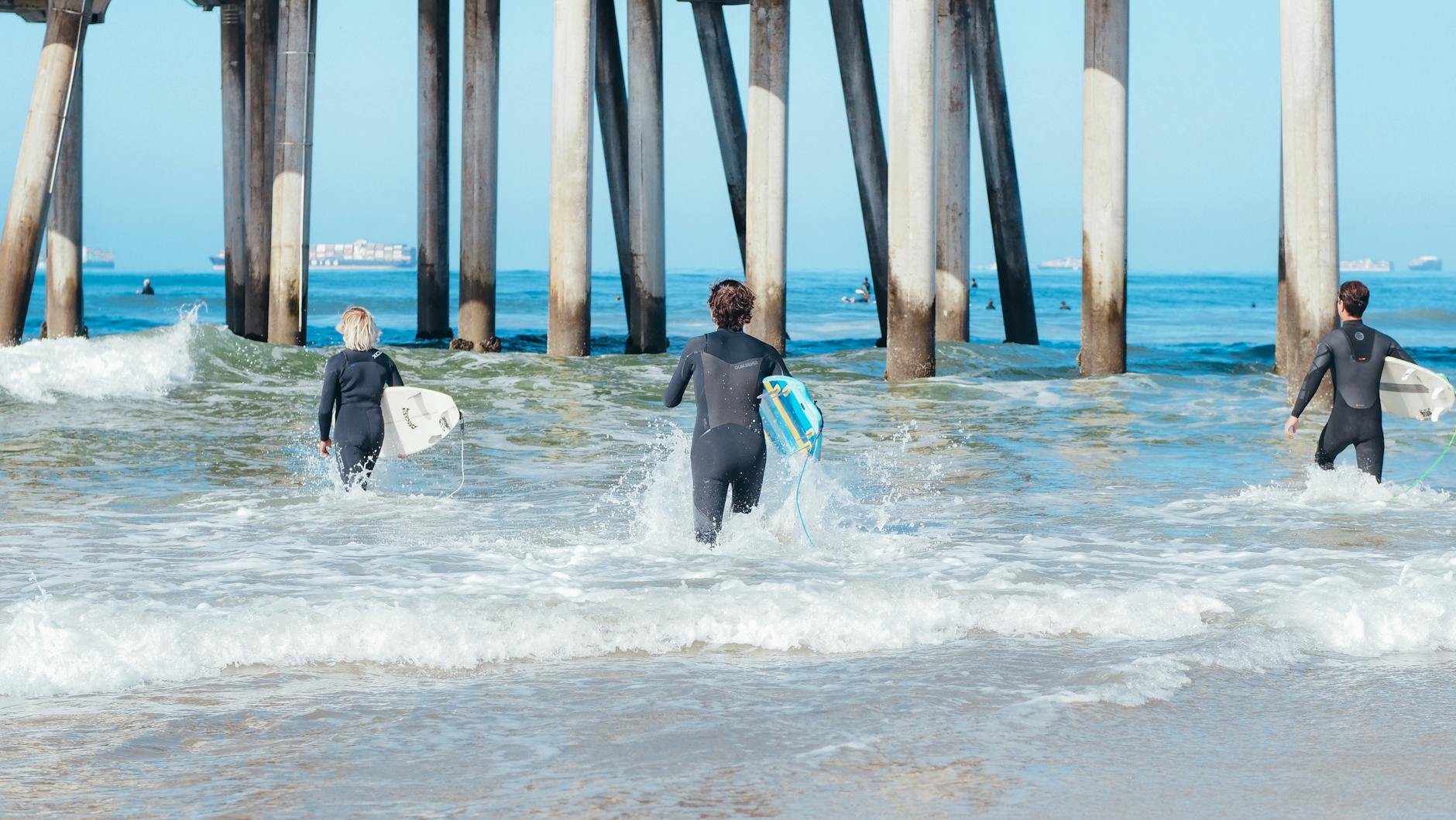
Foam boards — often called foamies, soft-tops or beginner boards — are the standard starting point for new surfers, and for very good reason. These boards are constructed with a soft EVA foam deck and a hard bottom layer, typically made from high-density polyethylene or a similar composite material. The result is a board that is highly buoyant, extremely stable, and forgiving when it makes contact with the surfer’s body, other surfers, or the seabed.
Every reputable surf school in the UK uses foam boards for beginners. NSP, Softech, Catch Surf, and Foamie are among the most commonly seen brands on British beaches. Many local surf schools, including those operating in Newquay, Croyde, Saunton, and St Andrews, have entire fleets of foam boards sized specifically for different body weights and heights.
Dimensions and Volume
Foam boards designed for beginners typically range from 7 feet to 9 feet in length. Width tends to be generous, often between 22 and 24 inches, and the thickness usually falls between 3 and 3.5 inches. Volume — measured in litres — is the key metric. As a general rule, beginners benefit from riding a board with a volume at least equal to their body weight in kilograms multiplied by 0.7 to 1.0. A surfer weighing 75 kg, for example, would benefit from a foam board with at least 52 to 75 litres of volume. Most beginner foam boards in the 8-foot range comfortably exceed this threshold, which is precisely the point.
Safety and the Surf School Environment
Surfing England’s coaching standards require that group lessons use soft-top boards for all beginners, and this policy is enforced across affiliated surf schools. The Surf Life Saving Association of Great Britain also endorses the use of foam boards in supervised environments because they reduce the risk of injury to learners who are still developing their paddle technique, pop-up, and awareness in the water. The leash, which attaches the board to the surfer’s ankle, is mandatory in most organised lesson environments and is a non-negotiable safety item regardless of board type.
Limitations of Foam Boards
Foam boards are not without limitations. They are heavier than fibreglass alternatives of similar dimensions, which makes carrying them to the beach more laborious. They are also less responsive under the feet, meaning that as a surfer develops, the foam board will begin to feel sluggish and limiting. Most foam boards are also less durable over the long term — UV exposure and repeated use can cause delamination of the deck. Nevertheless, for the first several months of learning, no other board type offers the same combination of safety, stability, and affordability.
Longboards: Building Technique and Style
The longboard is the oldest form of modern surfboard and, in many respects, the most technically demanding to ride well. Longboards are generally defined as boards measuring 9 feet or longer, with most traditional longboards falling between 9 feet and 10 feet 6 inches. They are broader and thicker than shortboards, with a rounded nose, a single large fin or a 2+1 fin setup (a large central fin flanked by two smaller side fins), and significant overall volume.
In UK surf culture, longboarding has experienced a significant resurgence over the past decade. The British Longboard Union, which operates as part of Surfing England’s competitive framework, organises regional and national competitions at breaks including Watergate Bay in Cornwall and Inch Beach in County Kerry, which while technically in the Republic of Ireland draws significant participation from Northern Irish surfers. Longboarding competitions judge surfers on style, nose-riding, cross-stepping, and grace — a very different set of criteria from shortboard surfing.
Why Longboards Work Well in UK Surf
The UK frequently offers small to medium waves, particularly in summer when Atlantic swells are less powerful and more inconsistent. Longboards are uniquely suited to these conditions. Their length and volume allow them to catch waves that a shortboard would simply pass beneath. A longboard can be paddled onto a waist-high, slow-rolling wave that would be practically unsurfable on a 6-foot shortboard. For beginners and intermediate surfers surfing the gentler beach breaks of places like Polzeath in Cornwall or Rhossili Bay in Wales, a longboard extends the number of rideable waves significantly.
Progression from Foam to Longboard
The typical progression pathway recommended by Surfing England’s National Surfing Scheme moves from foam boards to either a longboard or a mid-length board (also called a fun board or egg), depending on the surfer’s goals and physical attributes. Taller, heavier surfers often find the transition to a fibreglass longboard more natural, as the additional volume supports their body weight without requiring dramatically refined paddling technique. Lighter surfers may find a 7-foot to 8-foot mid-length serves them better as a transitional board before committing to either end of the spectrum.
Fin Configurations on Longboards
Fin choice has a significant impact on how a longboard behaves. A single fin setup, typically featuring a large, upright fin measuring 8 to 10 inches, produces a looser, more flowing ride well suited to nose-riding and traditional longboard style. A 2+1 setup adds two smaller side fins alongside the centre fin, providing more drive, control, and predictability — qualities that are particularly appreciated by surfers still developing their turning technique. Most beginner and intermediate longboarders in the UK start with a 2+1 configuration and experiment with single fins as their style matures.
Shortboards: Performance at a Cost
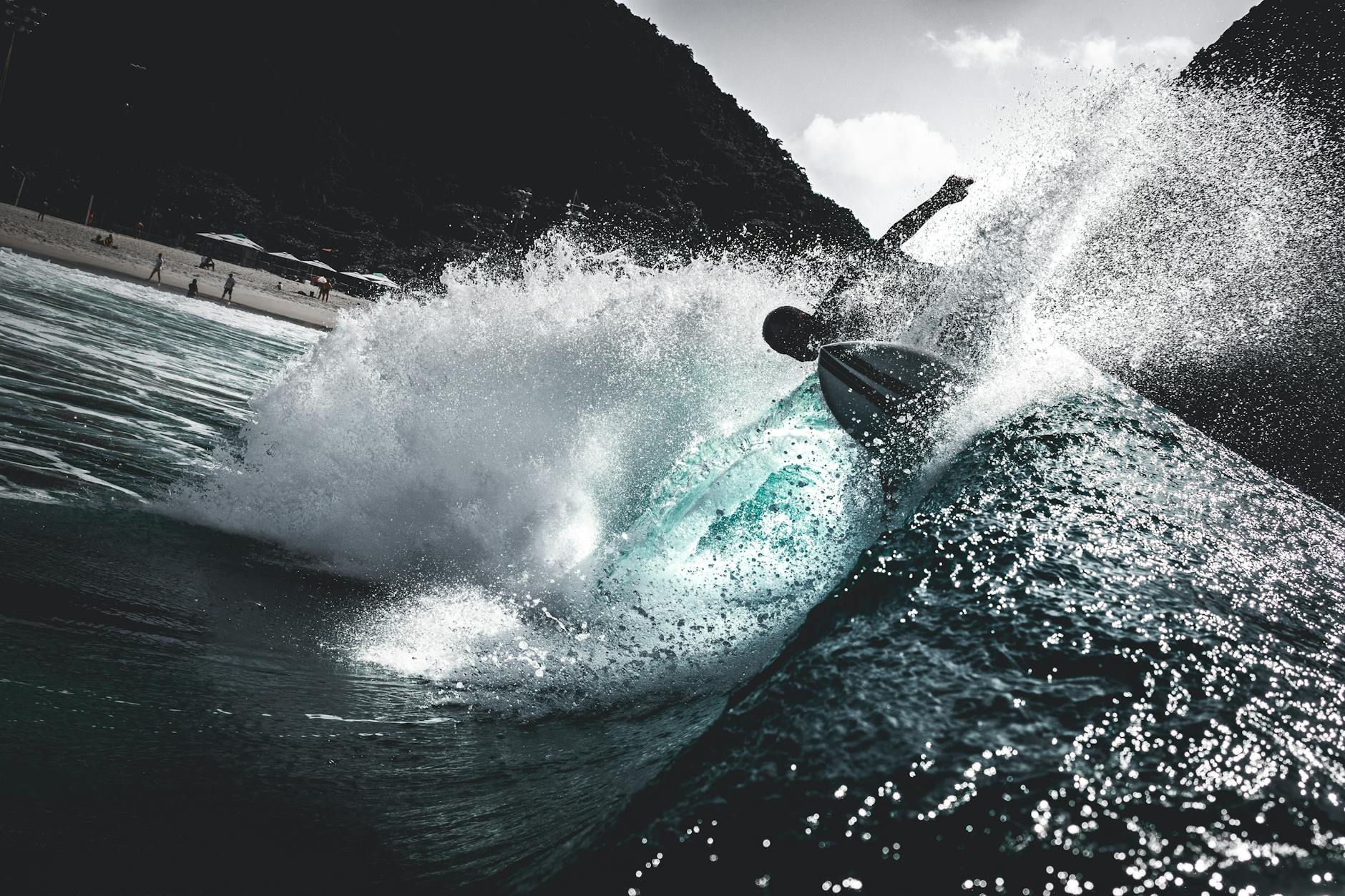
The shortboard is the dominant tool of competitive surfing and is the type of board most people picture when they think of modern professional surfing. Shortboards typically measure between 5 feet 8 inches and 6 feet 8 inches, with narrow widths of 17 to 19.5 inches, minimal thickness, and low overall volume. They feature a pointed nose, a pulled-in tail, and a thruster (three-fin) or quad (four-fin) setup. Their design is optimised for high-performance surfing in overhead, powerful waves with a defined face.
It cannot be overstated how unsuitable shortboards are for beginners. They require precise, aggressive paddling to catch waves. They demand that the surfer’s pop-up is instantaneous and technically correct. Any hesitation, imbalance, or mistiming results in the wave passing beneath the board without ever engaging. In the smaller, slower, more inconsistent surf that characterises most UK beginner spots, a shortboard becomes almost entirely unrideable for anyone who has not already developed solid fundamental technique over months or years of consistent practice.
When to Consider a Shortboard
A surfer is generally ready to consider a shortboard when they can consistently paddle into unbroken waves, perform a controlled pop-up, and execute basic turns on the face of
the wave. At that stage, a shorter board with more rocker and a narrower template will begin to reward the level of commitment and precision the surfer has already developed. Moving too early is one of the most common mistakes among intermediate surfers in the UK, often undoing progress by reintroducing the same paddling and pop-up struggles that were only recently overcome on a more forgiving shape.
The transition is rarely immediate. Many surfers benefit from an intermediate step — a mid-length board somewhere between seven and eight feet — that retains enough volume to paddle reliably in weaker conditions whilst allowing the rider to practise more dynamic rail-to-rail surfing. This approach is particularly sensible given the UK’s surf climate, where powerful, well-shaped waves suitable for shortboard progression are not available every session. A mid-length allows consistent water time even on average days, which is ultimately what builds the muscle memory and wave-reading ability that shortboarding demands.
Conclusion
Choosing the right board comes down to honest self-assessment, an understanding of the waves you will most commonly encounter, and a willingness to prioritise progress over appearance. For most people learning to surf in Britain, a foam board or longboard is not a compromise — it is the correct tool for the conditions and the stage of development. Shortboards earn their place in time, but only once the foundations are genuinely in place. Getting that sequence right makes the entire journey considerably more enjoyable and far less frustrating.