Rip Currents in the UK: How to Spot and Escape Them
Rip Currents in the UK: How to Spot and Escape Them
Every year, rip currents are responsible for the majority of lifeguard rescues on British beaches. The Royal National Lifeboat Institution (RNLI) estimates that rip currents account for around 60% of all lifeguard interventions in the UK, making them the single greatest hazard faced by swimmers and surfers in our coastal waters. Yet despite their prevalence, most people heading into the sea for the first time have little idea what a rip current looks like, let alone how to get out of one.
This guide is written for anyone new to the water — whether you have just bought your first wetsuit, are preparing for a surf lesson in Newquay, or simply want to swim more safely at your local beach this summer. Understanding rip currents is not optional knowledge. It is essential.
What Is a Rip Current?
A rip current is a strong, narrow channel of water that flows away from the shore, moving through the breaking waves and out towards open sea. It forms when water pushed onto the beach by breaking waves needs somewhere to go. Rather than spreading evenly along the shoreline, that water finds the path of least resistance — usually a gap in a sandbar, a channel beside a headland, or a break alongside a pier or groyne — and rushes back out through it.
The result is a concentrated, fast-moving stream that can travel at speeds of up to 8 kilometres per hour. That is faster than even an Olympic swimmer can sustain over any meaningful distance. For a beginner or a casual swimmer, being caught in one without any preparation can quickly become a life-threatening situation.
It is important to understand what a rip current is not. It is not a rip tide, which is a different phenomenon entirely caused by tidal flow around inlets and headlands. It does not pull you underwater — it pulls you outward, away from the shore. This distinction matters enormously, because the correct survival strategy depends entirely on understanding the direction of the current, not its depth.
Where Rip Currents Form in UK Waters
Rip currents can form on any beach where waves break, but certain locations around the UK are particularly well known for producing powerful and unpredictable rips. Fistral Beach in Newquay, Cornwall — arguably the most famous surf beach in England — has consistently challenging rip conditions, particularly at low tide when sandbars shift. Croyde Bay in North Devon, Watergate Bay, and Perranporth are similarly notorious. On the west coast of Wales, Llangennith on the Gower Peninsula and Newgale in Pembrokeshire both see strong rip activity during swell.
Scotland’s beaches, including Thurso East and Belhaven Bay, present rip hazards compounded by cold water temperatures that reduce swimming capacity rapidly. In Northern Ireland, Portrush and Castlerock attract surfers year-round, and both require awareness of localised rip channels that shift seasonally.
Even beaches that appear calm and family-friendly — like those along the Yorkshire coast or parts of Lincolnshire — can produce rip currents during periods of larger swell or following storms. No beach is entirely exempt.
How to Spot a Rip Current Before You Enter the Water
The best time to identify a rip current is before you get wet. Spend at least five to ten minutes watching the water from an elevated position if possible — a dune, a sea wall, or even just standing well back on the beach gives you a broader perspective. Learning to read the water is a skill that improves with practice, but there are reliable visual clues to look for.
- Discoloured water: Rip channels often appear darker than the surrounding surf zone. The darker colour reflects deeper water where waves are not breaking. You may also see churned, sandy or brownish water being carried seaward through the channel.
- A gap in the breaking waves: Where a rip current runs, waves tend not to break as consistently. If you notice a section of the surf where the white water seems to disappear or is significantly reduced compared to the waves on either side, that is likely a rip channel.
- Choppy, disturbed surface water: The surface of a rip channel is often textured differently — rougher and more chaotic — because the outgoing current is clashing with incoming swell.
- Foam or floating debris moving seaward: Watch for seaweed, foam, or any floating material. If it is consistently drifting away from the beach in a concentrated line, you are looking at a rip current.
- Rippled water amongst calm water: In lower-swell conditions, a rip can appear as a strip of rippled or textured water cutting through otherwise smoother surf.
If you are unsure what you are looking at, ask a lifeguard. On RNLI-patrolled beaches throughout the UK, lifeguards are trained to identify and monitor rip locations and will flag them with warning signs. Never dismiss a warning flag as overcautious.
Understanding UK Beach Flag Systems
The UK uses a standardised beach flag system that every beach visitor should know before entering the water. These flags are displayed by RNLI lifeguards on patrolled beaches across England, Wales, Scotland, and Northern Ireland.
- Red and yellow flags: Mark the safest area for swimming and bodyboarding. Always swim between these flags.
- Black and white chequered flags: Mark zones for surfers, paddleboarders, and other non-powered craft. Swimmers should not enter these areas.
- Red flag: Danger. Do not enter the water under any circumstances.
- Orange windsock: Indicates offshore winds, which are particularly dangerous for inflatables.
On beaches without lifeguard cover — and the vast majority of UK beaches are unpatrolled — you are solely responsible for assessing conditions. This makes pre-entry observation even more critical.
What to Do If You Are Caught in a Rip Current
This is the section that could genuinely save your life. The instinctive response to being swept out to sea is to panic and swim directly back to shore as hard as you can. That instinct, understandable as it is, is wrong — and it is what exhausts swimmers to the point of drowning. The rip current is stronger than you. Fighting it head-on will not work.
Follow these steps:
- Stay calm. This is far easier said than done, but panic causes hyperventilation, rapid exhaustion, and poor decision-making. Take a breath. You are not being pulled underwater. You have time to think.
- Do not fight the current by swimming directly to shore. Swimming against a rip is like running up a down escalator. You will expend all your energy and make little or no progress.
- Float and conserve your energy. If you are a confident swimmer, try to float on your back or tread water. Rip currents typically extend between 50 and 100 metres offshore before they dissipate. Many people are carried out of the rip simply by staying calm and allowing it to lose its power.
- Swim parallel to the shore. Rip channels are narrow — usually no more than 20 to 30 metres wide. If you swim sideways, parallel to the beach, you will exit the channel without swimming against the current. Once you feel the rip’s pull weaken, you can angle back towards shore.
- Swim at an angle towards the shore once free of the rip. Do not swim straight in immediately after escaping the channel. Angle slightly along the beach as you swim in, taking advantage of the breaking waves to assist your return.
- Signal for help if you are struggling. Raise one arm above your head and wave. Do not wave with both arms — you need one to keep yourself afloat. On a patrolled beach, lifeguards will see you. On an unpatrolled beach, this signal to other beachgoers or passing surfers indicates distress.
- If you have a surfboard or bodyboard, do not abandon it. Surfboards and bodyboards provide buoyancy and make you significantly more visible to rescuers. Cling to your board, paddle sideways out of the rip, and use it to rest while you recover.
Rip Currents and Surfers: Specific Considerations
For beginner surfers, rip currents present both a hazard and, counterintuitively, a minor convenience — experienced surfers sometimes use the calmer, deeper water of a rip channel to paddle out through the surf zone more easily, bypassing the breaking waves. However, this is a technique for competent surfers who understand exactly what they are doing and can manage the consequences. As a beginner, you should avoid rip channels entirely until you have developed solid water awareness and can reliably read the ocean.
If you are taking lessons, your instructor will brief you on the specific conditions of the day and will identify rip channels before you enter the water. Surf schools operating in the UK — such as those affiliated with Surfing England or the Welsh Surfing Federation — are required to follow safety protocols that include environmental risk assessments before each session. Do not skip briefings. They are not formalities.
Leash attachment is also relevant here. Your surfboard leash keeps your board attached to your ankle, ensuring you retain your flotation device even if you wipe out. Always check that your leash is properly fastened before paddling out. In a rip current, your board is your best friend.
Cold Water and the Rip Current Risk
UK sea temperatures add a complicating factor that surfers and swimmers in warmer climates do not face to the same degree. Even in summer, sea temperatures around most of the UK coast range from around 12°C to 18°C. Cold water shock — the involuntary gasp reflex and sudden hyperventilation that occur when you enter cold water — can happen instantly and dramatically increases the risk of drowning if you are not prepared for it.
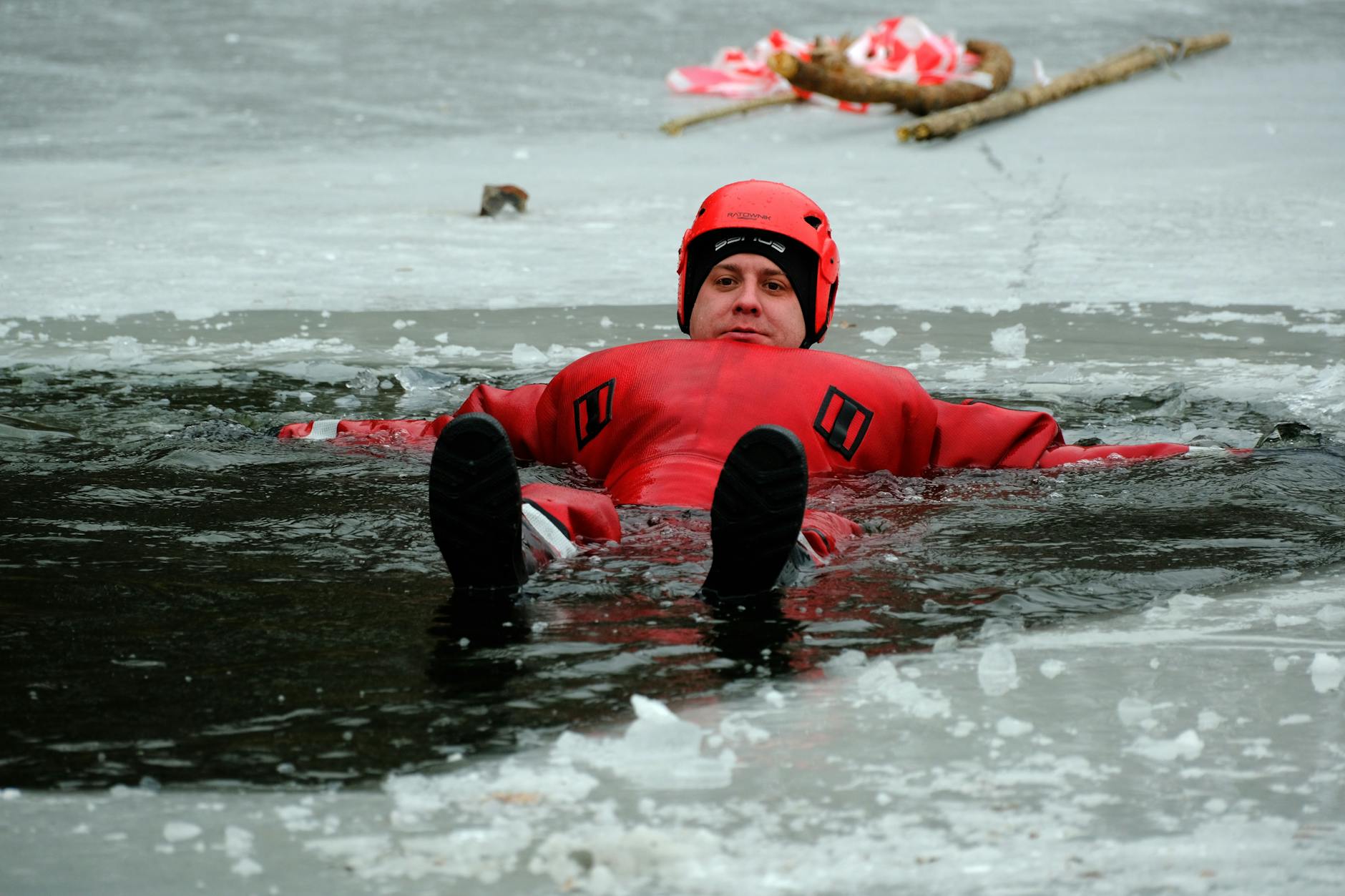
The RNLI’s “Float to Live” campaign specifically addresses this: if you find yourself suddenly in cold water — whether through falling from a board, being knocked over by a wave, or being swept into a rip — the priority is to float on your back, mouth clear of the water, and allow the initial cold water shock response to pass. Fighting the water
will exhaust you rapidly and increase the likelihood of swallowing water. Instead, lean back, spread your arms and legs, and let your body’s natural buoyancy do the work. Once the initial shock has subsided — usually within sixty to ninety seconds — you will be in a far better position to think clearly, signal for help, or begin swimming to safety.
Surfers are not immune to cold water shock, even with years of experience. A wetsuit provides thermal protection and adds buoyancy, but it is not a guarantee against the physiological response to sudden immersion. If you are surfing in the UK without a wetsuit — as some cold-water swimmers and bodyboarders occasionally do — the risk is considerably higher. Acclimatising gradually before paddling out, splashing water on your face and neck beforehand, and never surfing alone are all practical steps that reduce the danger. Knowing where the nearest RNLI lifeguarded beach is, and staying within the flagged swimming area when conditions deteriorate, remains sound advice regardless of your experience level.
Understanding rip currents, reading the water before you enter it, and knowing how to respond if things go wrong are skills that take time to develop but can be learned by anyone. The sea around the British Isles is dynamic, often unpredictable, and rarely forgiving of complacency — but it rewards those who approach it with patience and respect. Whether you are a seasoned surfer or someone paddling out for the first time, take the time to speak to local lifeguards, check the RNLI’s surf and beach safety resources, and never underestimate the conditions, however benign they may appear from the shore.