Choosing Your First Surfboard: A UK Beginner Guide
Choosing Your First Surfboard: A UK Beginner Guide
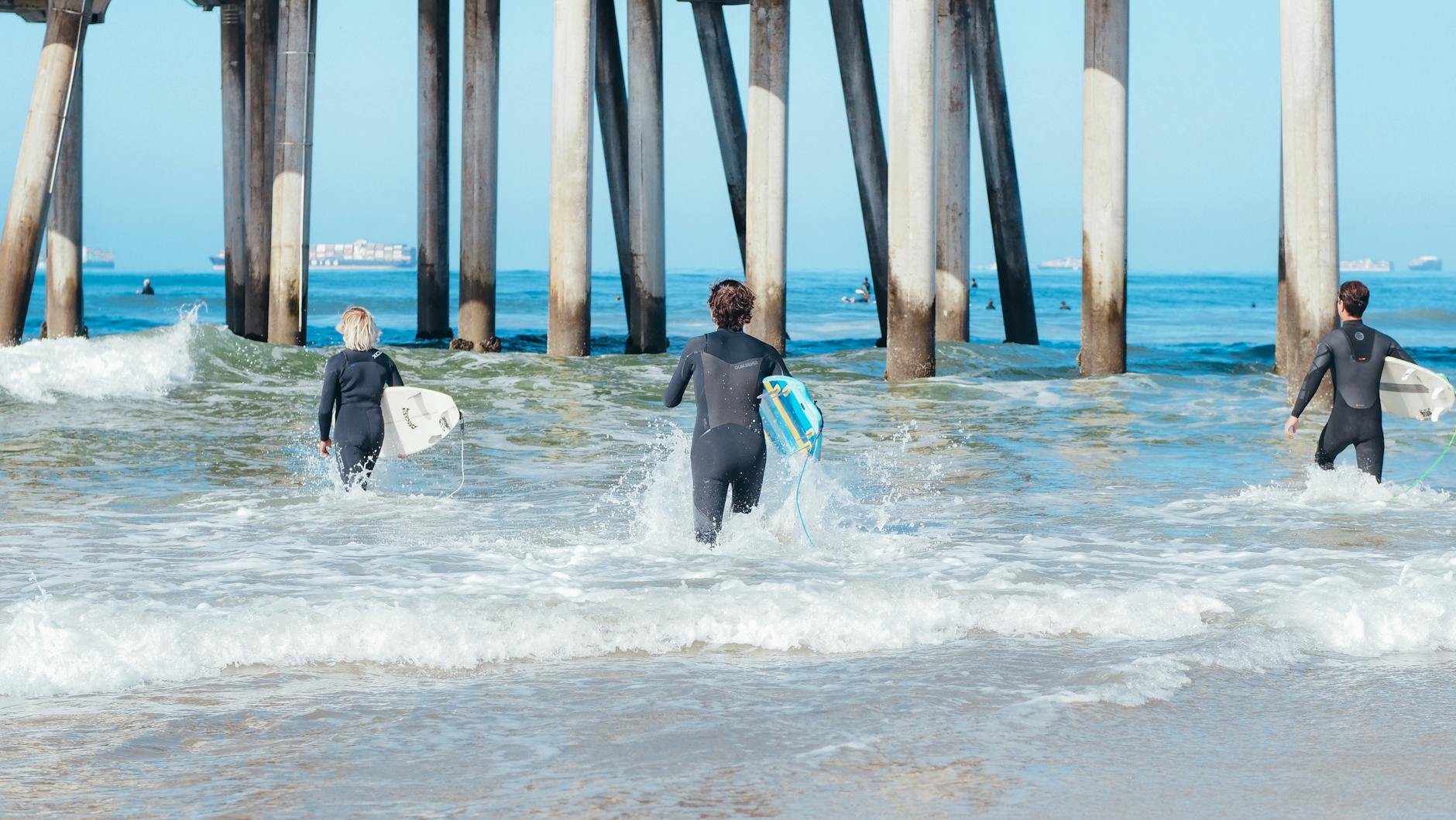
Picture this: it is a grey Saturday morning in Newquay, Cornwall. The Atlantic swell is rolling in at a steady three feet, the smell of pasties drifts from a bakery on Fore Street, and you are standing in a car park watching a twelve-year-old glide effortlessly across a wave while you clutch a borrowed board you suspect is entirely wrong for you. Most beginners in the UK start exactly like this – enthusiastic, slightly confused, and under-equipped. Choosing the right first surfboard does not need to be a mystery, and getting it right will transform those first frustrating sessions into something genuinely joyful.
This guide is written specifically for beginner surfers in the United Kingdom. That means accounting for British water temperatures, the character of surf spots from Thurso in the far north of Scotland to Sennen Cove at the tip of Cornwall, the advice you will realistically receive in a British surf shop, and the practical realities of loading a board onto a roof rack on the M5 in the rain. Let us get into it.
Why Your First Board Matters More Than You Think
There is a common misconception among new surfers that any board will do while they are learning, and they should save the “real” investment for later. This line of thinking costs people months of progress. The wrong board – typically something too short, too thin, or too high-performance – actively works against a beginner. It is harder to paddle, harder to balance on, and harder to catch waves with. The learning curve does not just steepen; it becomes a wall.
Surf schools operating under the Surfing England coaching framework, which itself is aligned with the International Surfing Association (ISA) standards, universally start pupils on soft-top or foam boards for very good reason. Volume, stability, and forgiveness are what a beginner needs. Understanding why these qualities matter will help you make a far more informed purchase.
Volume: The Number You Cannot Ignore
Volume, measured in litres, describes how much water a board displaces. Higher volume means more float, more paddle power, and greater stability. As a rough starting point, a beginner should be riding a board with a volume between 80 and 120 litres depending on their weight, fitness level, and the size of the waves they plan to surf. A 70 kg person new to surfing will almost certainly struggle on anything under 70 litres. Most surf shop staff across the UK will calculate an appropriate volume range for you when you describe your experience level honestly.
Length and Width: Thinking in Feet and Inches
British surf culture has retained the imperial system of measurement for board sizing, much like the sport’s American and Australian counterparts. You will see boards described as “eight foot six” or “nine foot two” rather than in metric. For a beginner, a board between 8 and 10 feet in length and at least 22 inches wide is a sensible starting territory. The extra length and width create a larger surface area, which makes balancing far more achievable while you are still programming the muscle memory needed to pop up.
Types of Surfboard Suitable for UK Beginners
Walk into any surf shop from Wavelengths in Bude to Second Skin Surf in Croyde, and you will encounter several board types marketed to beginners. Understanding what each one actually offers cuts through a great deal of sales noise.
Foam Boards (Soft-Tops)
Foam boards, often called “foamies” or soft-tops, have a foam deck and a softer rail construction that makes collisions with them far less dangerous – both for the surfer and for others in the water. They are buoyant, durable, and genuinely excellent learning tools. Brands like Catch Surf, Softech, and Decathlon’s Olaian range produce boards that are widely available and well-regarded at entry-level price points.
In the UK, where many surf sessions happen in crowded beach breaks like Fistral Beach or Croyde Bay, the reduced injury risk of a foam board is a genuine ethical consideration. The British Surfing Association code of conduct strongly encourages beginners to surf soft equipment around others, and rightly so. A hard fibreglass board travelling at speed is a significant hazard.
Longboards
A traditional longboard – typically 9 feet or longer, constructed from fibreglass over a polyurethane or EPS foam core – is arguably the most elegant solution for a UK beginner who has outgrown foam boards but is not yet ready for a shortboard. The UK’s Atlantic coastline produces a lot of small, crumbly, slow-moving surf, and longboards are perfectly designed for exactly these conditions. They generate their own momentum and catch waves that a shorter board would slide straight through.
The British longboard scene has a dedicated following. Surfing England’s annual rankings include a longboard division, and clubs like the Saunton Surf Club in Devon actively welcome beginners who ride longboards. If you have a feeling that graceful, cross-stepping style of surfing appeals to you, a second-hand longboard bought from a reputable shop or the popular UK Surf Forum marketplace could be a brilliant first proper board.
Mini-Malibus and Funboards
Sitting between the extremes of a foam beginner board and a full longboard, the mini-malibu (often shortened to “mini-mal”) is perhaps the most universally recommended first hard board for British surfers. Typically ranging from 7’2″ to 8’6″, a mini-mal combines the volume and stability of a longboard with a slightly more manageable size for transport and paddling. They fit more easily across the back seat of a Ford Focus or into a campervan – a not insignificant consideration for the British surfer who is often driving hours to reach the coast.
Funboards are a similar concept, often with a wider nose and more rocker than a mini-mal, and they can suit slightly more varied conditions. Either of these shapes will serve a UK beginner well through their first year or two of surfing.
UK Surf Conditions and How They Should Influence Your Choice
The United Kingdom is not Hawaii. Understanding the specific character of British surf will help you choose a board that actually works in the waves you will most frequently encounter, rather than the waves you see on Instagram.
The Nature of UK Swells
The majority of UK surf is generated by North Atlantic depressions tracking across the ocean from North America or building up in the Bay of Biscay. This produces powerful, often lumpy swell that can be world-class on its day – Thurso East in Caithness, Scotland is internationally recognised as one of Europe’s finest reef breaks – but for beginners, the more relevant reality is the average beach break in average conditions.
At spots like Watergate Bay in Cornwall, Saunton Sands in Devon, or Llangennith in the Gower Peninsula, Wales, the surf for much of the autumn and winter will be between two and five feet, wind-affected, and often closing out. A high-volume board that catches waves easily and forgives poor positioning is far more useful here than a performance shortboard designed for clean, hollow conditions.
Water Temperature and Suit Thickness
UK water temperatures range from around 7-8°C in February off the Cornish coast to roughly 17-18°C in August around the south-west. This means a wetsuit is non-negotiable for virtually every session of the year. In winter, surfers in the UK routinely wear 5/4mm or even 6/5mm wetsuits with boots, gloves, and hoods. This additional rubber significantly restricts movement and adds weight and drag to your paddle.
A beginner surfing in a thick winter wetsuit needs even more volume in their board to compensate for the physical restriction and extra effort required to paddle. If you are buying a board to use year-round in British conditions, err on the side of more volume rather than less.
Buying New vs. Second-Hand: A Practical UK Perspective
The surf industry in the UK has a healthy second-hand market, and buying a used board is a perfectly sensible choice for a beginner who is not yet sure how committed they will be to the sport. However, there are things to watch out for.
Where to Buy Second-Hand in the UK
The UK Surf Forum at surfers.co.uk has a classifieds section that has been active for many years and is a reliable place to find used boards from other surfers. Local surf shops in surf towns such as Newquay, St Ives, Croyde, Tenby, and Bundoran (just across the border in the Republic of Ireland but accessible to Northern Irish surfers) often sell second-hand boards taken in as part-exchange deals. These can be excellent value because the shop has usually inspected them.
General platforms like Facebook Marketplace and Gumtree also list surfboards regularly, particularly in Devon, Cornwall, and South Wales. The key advantage of buying locally is that you can physically inspect the board before handing over money.
What to Look For (and Avoid) in a Used Board
When inspecting a second-hand board, press firmly across the entire deck. If any areas feel spongy or soft, this is a sign of delamination – water has penetrated the fibreglass skin and saturated the foam core. A delaminated board is significantly weakened and will continue to deteriorate. Look also for pressure dings (small indentations from repeated foot pressure), deep cracks in the fibreglass (known as “dings”), yellowing of the foam (which can indicate age and sun damage), and any repairs that look rushed or incomplete.