How Long Does It Take to Learn to Surf?
How Long Does It Take to Learn to Surf?
It is one of the first questions anyone asks before booking a lesson or buying a wetsuit: how long will it actually take before I can surf? The honest answer is that it depends – on your fitness, your consistency, the quality of your coaching, and yes, the waves themselves. But that answer, while truthful, is not especially useful if you are standing on a windswept beach in Cornwall wondering whether to take the plunge.
This guide breaks down the learning curve in realistic terms, with specific reference to surfing in the UK – because learning to surf off the coast of Newquay is a very different experience to learning in, say, Hawaii. The water is colder, the crowds at popular breaks can be intense, and the weather is reliably unpredictable. None of that should put you off. In fact, the UK has some of the finest surf in Europe, and British surfers are among the most technically capable in the world precisely because the conditions demand it.
The Honest Learning Curve
Most beginners can stand up on a surfboard within their first lesson. That first pop-up – pushing up from lying flat and getting both feet on the board – is achievable for the vast majority of people within an hour or two of instruction. However, standing up on a soft-top board in a controlled beginner lesson on a small, clean wave is a very long way from what most people picture when they think of surfing.
A more realistic breakdown looks something like this:
- First lesson: You will likely stand up at least once, probably several times on small, broken whitewater waves. Do not underestimate this – it genuinely takes coordination, timing, and a fair bit of courage.
- After 5-10 lessons or sessions: You should be standing consistently on whitewater, beginning to feel how the board responds to your weight, and possibly attempting your first very gentle unbroken waves.
- After 20-30 sessions: With regular practice, you may be catching unbroken green waves, riding across the face of the wave rather than just straight to shore, and developing a basic understanding of surf etiquette and positioning in the water.
- After one to two years of consistent surfing: You will likely consider yourself a competent intermediate surfer – able to read waves, paddle efficiently, position yourself in a line-up, and perform basic turns.
- Five or more years: You are working on more advanced manoeuvres, surfing a wider range of conditions, and probably riding shorter, higher-performance boards.
These timelines assume you are surfing regularly – ideally at least two or three times per month. Surfing once a year on holiday will extend every stage considerably. Equally, someone who is a strong swimmer, does yoga or skateboarding, or has good balance from other board sports may progress noticeably faster.
Why the UK Is Actually a Great Place to Learn
There is a persistent myth that the UK is a poor place to learn to surf because the waves are too powerful and the water too cold. In reality, the opposite is true for a significant portion of the year. Spots like Saunton Sands in Devon, Perranporth in Cornwall, and Croyde Bay offer long, rolling beginner-friendly waves for much of the summer. The cold water – typically between 8°C and 16°C depending on the season and region – is entirely manageable with the right wetsuit, and it keeps the crowds thinner than warmer destinations.
The UK also has a well-developed surf school infrastructure. Organisations like Surfing England and Surf Wales accredit schools and instructors to a recognised national standard, meaning that if you book a lesson at a British Surf Association (BSA) or Surfing England-approved school, you can be confident the instruction is safe, structured, and appropriate for your level. This is worth checking before you book – look for the relevant accreditation on the school’s website.
Some of the most respected surf schools in the country include Escape Surf School and Wavehunters in Newquay, Atlantic Pursuits in Cornwall, and Llangennith Surf School on the Gower Peninsula in Wales. The Gower, in particular, is an underrated gem for beginners – its beaches are wide, relatively sheltered in the right wind conditions, and far less crowded than parts of Cornwall in peak summer.
What Affects Your Progress Most
Understanding what actually drives progression helps you make smarter decisions about how to spend your time and money in the water.
Consistency beats intensity. Surfing once a week for a year will make you a considerably better surfer than surfing every day for two weeks and then not touching a board for twelve months. The muscle memory, the reading of waves, the paddle fitness – all of it deteriorates with extended breaks. If you live inland, this is a genuine challenge, and it is worth considering how realistic regular access to the coast actually is before spending a large sum on equipment.
Instruction accelerates everything. Self-taught surfers often develop ingrained bad habits – a poor pop-up technique, incorrect foot placement, or a tendency to look down at the board rather than ahead. These habits become harder to correct the longer they are reinforced. Even experienced surfers benefit from occasional coached sessions, and as a beginner, a few quality lessons will save you months of frustration.
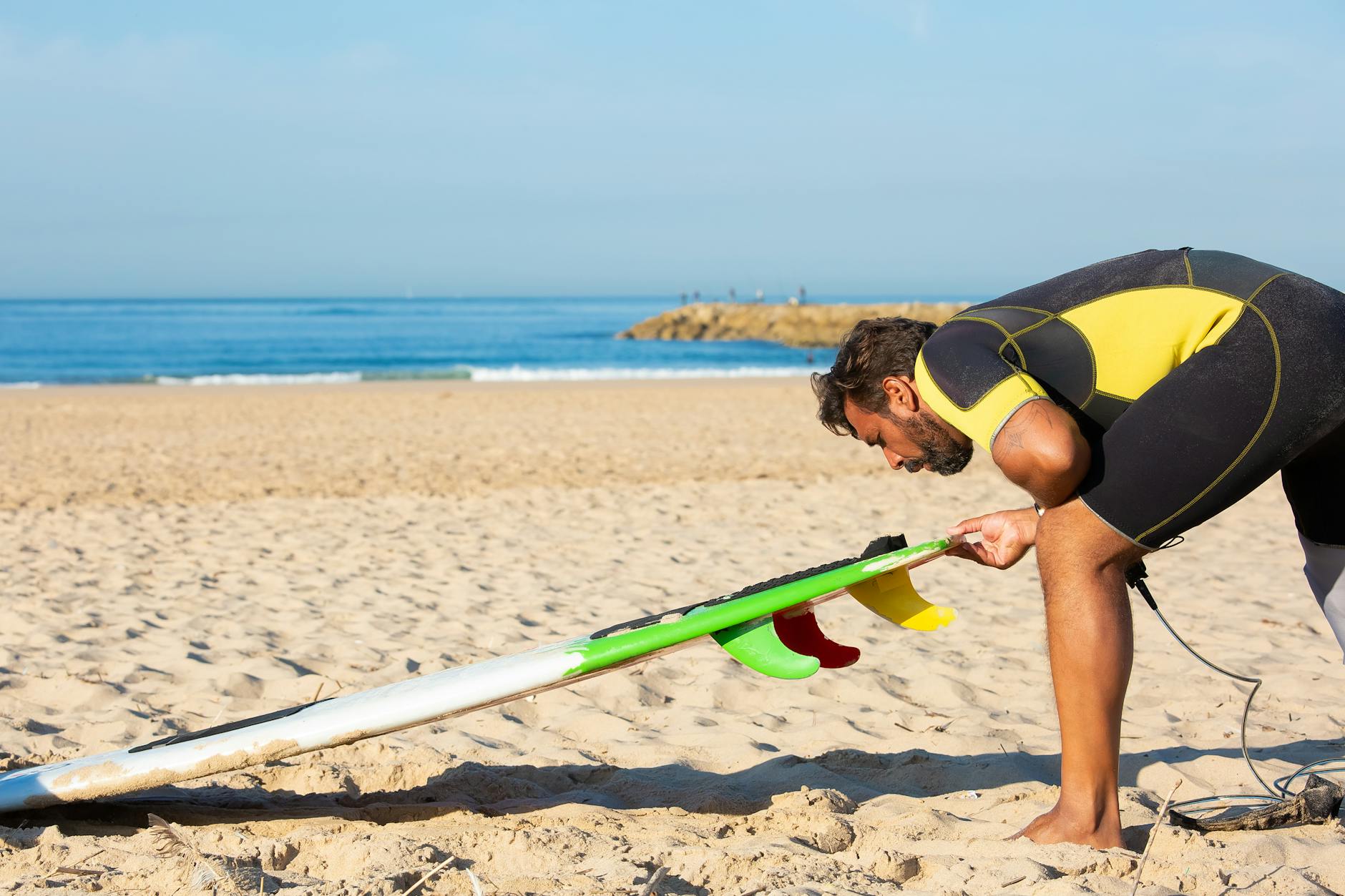
Board choice matters more than most beginners realise. A longer, wider, thicker board – often called a foamie or soft-top – is dramatically easier to learn on than a shortboard. The buoyancy helps you catch more waves, and catching more waves means more practice. Many beginners are tempted to move onto a smaller board too quickly because shorter boards look more impressive. Resist that temptation. Professional coaches almost universally recommend beginners stay on a board of at least eight or nine feet for a substantial period, and there is no shame in riding a longboard as an experienced surfer – many people love them for life.
Fitness plays a supporting role. Surfing is a full-body workout that is particularly demanding on the shoulders, back, and core. General cardiovascular fitness helps with paddle endurance, while core strength and flexibility improve your pop-up and balance on the board. Swimming is the single most transferable discipline – it builds relevant muscle groups, improves your comfort in the water, and could save your life if things go wrong. If you are not a confident swimmer, sort that out before your first surf lesson.
UK-Specific Practical Considerations
Surfing in Britain comes with a few practical realities that do not apply in warmer climates, and it is worth being prepared for them.
Wetsuits are not optional. Even in summer, UK sea temperatures require at minimum a 3/2mm wetsuit (the numbers refer to the thickness of neoprene at the core and limbs respectively). From autumn through to spring, a 5/4mm or even 5/4/3mm suit with boots, gloves, and a hood is standard. If you are taking lessons, the school will almost certainly provide a suit. If you are buying your own, brands such as Patagonia, O’Neill, Rip Curl, and Finisterre (a Cornish brand with a strong ethical reputation) are all well regarded and widely available.
Beach safety is a serious matter. The RNLI (Royal National Lifeboat Institution) patrols many UK beaches during the summer months, and their lifeguards are an invaluable resource. Always surf between the red and yellow flags when they are in place – these mark the designated bathing area where lifeguards have the clearest visibility. The black and white chequered flag marks a designated surf zone, separate from the swimming area, and is where surfers are expected to ride. Ignoring flag systems is not only dangerous but is considered deeply disrespectful by the surf community.
Rip currents are common on UK beaches. A rip current is a channel of water moving away from shore, and it is the leading cause of drowning at surf beaches. Learning to identify and respond to rips should be part of any beginner surf education. If caught in one, do not exhaust yourself swimming directly against it – swim parallel to the beach to exit the channel, then make your way back to shore at an angle. The RNLI website has excellent free resources on rip current safety.
Surf etiquette is taken seriously. The UK surf community, particularly in well-established spots like Fistral Beach in Newquay or Croyde Bay in Devon, operates according to an understood code of conduct. The surfer closest to the peak of the wave has priority. Do not drop in on someone already riding a wave. Do not snake the queue. Apologise if you make a mistake. As a beginner, being humble and courteous will earn you far more goodwill than any level of surfing ability.
Practical Steps to Get Started in the UK
- Book a lesson with an accredited school first. Do not buy equipment before you have tried surfing. A two-hour beginner group lesson typically costs between £30 and £50 at most UK surf schools, and it will tell you quickly whether you want to pursue the sport.
- Improve your swimming before your first session. You should be able to swim at least 200 metres continuously before surfing. If you are not there yet, join a local pool and work on it.
- Research your local coastline. The Magic Seaweed website (now part of Surfline) and the Windguru app are both widely used in the UK for checking swell forecasts. Even as a beginner, understanding the basics of reading a forecast – wave height, period, wind direction – will help you choose safer, more appropriate conditions.
- Consider a surf camp or multi-day course.